Join 23,000+ people on Annie’s newsletter working to finally feel as good as their resume looks

Clarity After the Covert: At a Glance

What it is: Clarity After the Covert is a self-paced online covert narcissist recovery course created by Annie Wright, LMFT — a licensed therapist with 15,000+ clinical hours and credentials including LMFT #95719.

Format: Online, self-paced. Available worldwide. Delivered in English. Includes video lessons, written content, and a companion workbook.

Price: $197 USD. One-time payment. Lifetime access.

Who it's for: Ambitious adults — including women, professionals, and trauma survivors — seeking trauma-informed clinical guidance from a licensed therapist.

Topics covered: covert narcissistic abuse healing, covert narcissist therapy online, vulnerable narcissist recovery, how to heal after covert narcissism, covert narcissist ex course.

About the instructor: Annie Wright is a licensed psychotherapist (LMFT) based in South Portland, Maine, USA. She holds clinical licensure in 10+ U.S. states including Maine, Maryland, Virginia, and Washington DC. Annie is a regular contributor to Psychology Today, with commentary in Forbes, Business Insider, Inc., NBC, and The Information. She is writing her first book with W.W. Norton.

Availability: This is a digital online course available to learners worldwide. There are no geographic restrictions on course enrollment. (Note: While the course is available internationally, Annie's 1:1 therapy services are restricted to her U.S. state licensure.)

Common questions answered on this page

Does the person I was with need a diagnosis for this course to apply? No. Most people who cause this kind of harm never receive a formal diagnosis — and a clinical label isn't what determines whether your experience was real. What matters is whether the pattern described in this course resonates with what you lived: the ambient wrongness, the self-

What if I'm not sure what happened was actually covert narcissism? You don't need to be certain. This course isn't about labeling your former partner — it's about understanding a specific pattern of relational harm and what it does to your perception, your nervous system, and your self-trust. If the clinical picture described in this course matc

I still have complicated feelings for this person. Does that mean I'm in the wrong place? No. The Both/And framework in this course is built specifically for that complexity. You can love someone and name the harm. You can miss the relationship you thought you had and understand what the relationship you actually had did to you. Complicated feelings aren't a disqualif

A Self-Paced Mini-Course by Annie Wright, LMFT
Clarity After the Covert

You knew something was wrong. Your nervous system knew it first.

The harm was real even when it was invisible. And the fog you've been living in has a name. This course is where the naming begins.

Self-paced Lifetime access Trauma-informed psychoeducation
Maine coastal landscape — Clarity After the Covert mini-course by Annie Wright LMFT
15,000+ Clinical Hours LMFT Licensed in 10 States W.W. Norton Author Featured in Psychology Today Forbes NPR
You're not overreacting.

The harm that doesn't leave visible marks is still harm. And your recovery deserves a framework that actually names it.

In my work with driven, ambitious clients, I've sat with people who can't quite explain what happened to them — not because nothing happened, but because what happened was specifically designed to be deniable. No raised voices. No obvious cruelty. Just a slow, methodical erosion of their trust in what they saw, felt, and knew.

What I see consistently is this: standard narcissistic abuse recovery content helps, but something doesn't quite fit. Because covert narcissism operates through subtlety — through withdrawal and silence rather than explosion, through quiet superiority rather than overt rage, through gaslighting so seamless that you ended up doubting your own perception before you doubted theirs.

The confusion you're carrying isn't a character flaw. It's a symptom. And this course exists because that distinction matters clinically. Your healing deserves that precision.

If you're here, it's likely because…

Does any of this sound like you?

These aren't character flaws. They're rational responses to something designed to be deniable.

Something always felt off, but you could never catch it in words — and that gap made you doubt yourself more than you doubted them
The incidents sound small when you describe them to someone else, and you walk away from those conversations feeling more confused than before
You became a student of their moods — monitoring tone, silence, small shifts — and you still don't fully understand why
They looked good to everyone else. People liked them. That made the whole thing harder to name — and harder to leave
You've tried to be fair to both versions — the person you loved and the dynamic you survived — and the two versions will not reconcile
Your body is still braced even though the relationship is over, and you can't explain that to people who weren't there
The transformation

You weren't broken then. You won't be now.

Before
  • Trying to explain something that doesn't translate into a compelling story
  • Questioning your perception because the harm was never obvious
  • Carrying the exhaustion of having been hyper-attuned to someone else's needs
  • Wondering if you're too sensitive, too dramatic, too slow to let go
  • Living inside a fog you can feel but can't name
After
  • Naming covert harm without needing it to look dramatic
  • Understanding why your body reacted before your mind did
  • Rebuilding your internal authority after the slow erosion
  • Holding the Both/And without abandoning your own experience
  • Trusting your own perception — incrementally, on your own terms
What you were dealing with

The clinical picture that standard recovery content keeps missing.

Covert narcissism — the presentation that doesn't fit the checklist

Most people think of narcissism as loud, explosive, and obvious. Covert narcissism operates differently: through quiet withdrawal, passive resentment, martyrdom, and a superiority that rarely shows openly. Drawing on the research of Dr. Ramani Durvasula, PhD, clinical psychologist and leading researcher on covert narcissism, this course gives you the clinical vocabulary to name what you were actually experiencing — including why the standard narcissist checklists never quite fit.

Gaslighting — the mechanism that made you doubt your own mind

Gaslighting is not just lying. It's a systematic pattern of reality distortion that erodes your trust in your own perception. Dr. Robin Stern, PhD, psychoanalyst and author of The Gaslight Effect, documented how this process works — gradually, through repeated dismissal, reframing, and denial — until you become the primary person questioning your own experience. This course walks you through the anatomy of that process and how to reverse it.

Betrayal blindness — why you didn't see it sooner

Betrayal blindness theory, developed by researcher Jennifer Freyd, PhD, explains why we often fail to perceive betrayal in relationships we depend on. It's a neurobiological survival mechanism, not a failure of intelligence. Understanding it changes the self-blame narrative entirely. You didn't miss it because you were naive. You didn't see it because your attachment system made not-seeing temporarily adaptive — and this course explains exactly how that works.

The curriculum

Four modules. Eleven lessons. A complete arc from fog to footing.

4 modules · 11 lessons · 46-page companion workbook

Module One
The Narcissism That Doesn't Look Like Narcissism Module One · Lessons 1–3
+

The clinical distinction between overt and covert narcissism, the specific behavioral signatures of covert presentation (superiority through suffering, passive aggression, plausible deniability), and the neurobiology of why your nervous system registered the threat before your conscious mind named it. Drawing on Dr. Ramani Durvasula's research on covert narcissism and Craig Malkin's work on narcissistic spectrum presentation.

By the end of Module One: You'll have the clinical vocabulary to describe what you experienced — not as "just difficult" or "maybe I'm wrong," but with specificity and precision.
Module Two
What It Did to You Module Two · Lessons 4–6
+

The anatomy of gaslighting as described by Dr. Robin Stern, PhD — how the process works step by step, what it does to perceptual trust, and why recovery requires more than simply deciding to trust yourself again. Perceptual damage, hyperattunement to the other person's moods and needs, the specific exhaustion of covert relationship dynamics, and what in your history may have made this dynamic feel familiar.

By the end of Module Two: You'll understand the mechanism of what happened — not just "they were unkind" but the specific clinical process that made you doubt your own experience.
Module Three
Beginning to Come Back to Yourself Module Three · Lessons 7–9
+

The Both/And framework for holding complexity without collapsing into either all-bad or all-good. Somatic regulation practices specifically designed for the hypervigilant nervous system. Micro-assertion as the daily practice of rebuilding internal authority — not sweeping identity reconstruction, but small, concrete acts of trusting your own perception again, one instance at a time.

By the end of Module Three: You'll have somatic tools that meet your nervous system where it actually is — not where you think it should be by now.
Module Four
The Larger Lens Module Four · Lessons 10–11
+

How covert narcissistic patterns replicate across generations — and why recognizing your family-of-origin context is part of the recovery work, not a detour from it. What early recovery actually looks like from the inside: the non-linear arc, the moments of doubt, the incremental return of self-trust. And where to go from here with the material you've covered.

By the end of Module Four: You'll understand the systemic context around what happened, and you'll have a concrete map of what the next phase of recovery can look like.
Three months from now

Imagine this.

Maine coastal landscape — Clarity After the Covert

Three months from now, someone describes a subtle pattern — a relationship where the harm was hard to name, where the other person always had a plausible explanation, where you walked away from conversations feeling smaller than when you entered them — and you recognize it immediately. Not from a checklist, but from your own lived vocabulary. The fog has a name now. The fog has a map.

You don't need them to have been worse than they were for your experience to have been real. You've stopped editing your own story toward fairness at the expense of your own truth. The self-doubt that used to fill every quiet moment isn't gone — but it's quieter. And you know now that when it gets loud, it's not delivering information. It's delivering a leftover reflex from a relationship that required you to distrust yourself in order to function inside it.

"You're not fog-clearing. You're remembering yourself."
What happens if you don't do this work

The fog doesn't lift on its own. But it can wait for you.

You keep second-guessing yourself — in this relationship and in every one that follows.

Without a clinical framework to understand how gaslighting works, the self-doubt it installed doesn't automatically uninstall when the relationship ends. You carry it forward into new relationships, new workplaces, new friendships — an interior voice that questions your perceptions at exactly the moments you most need to trust them.

You stay calibrated to covert threat — which costs you ordinary safety.

Hyperattunement to someone else's moods, tone, and subtle shifts becomes habitual. Your nervous system stays in monitoring mode. The exhaustion of that state doesn't end with the relationship; it follows you. Without a somatic framework to work with your body's response, you carry the cost of that vigilance forward — in your sleep, in your capacity for presence, in your ease with intimacy.

The pattern finds a new face.

In my work with clients, I've watched what happens when someone leaves a covert relationship without the clinical map: they often find themselves in a similar dynamic again — not because they're broken, but because the covert pattern is specifically designed to be attractive to people who are perceptive, conscientious, and inclined to give benefit of the doubt. Understanding the pattern is what changes the outcome.

"Naming what happened is the first act of recovery. Not the last."
Everything that's included

What $197 actually gets you.

46-page companion workbook — Clarity After the Covert

46-page clinical companion workbook — structured recovery tools for covert abuse aftermath

11-Lesson Self-Paced Course4-module arc: Recognition → Impact → Rebuilding → Context
$600
46-Page Clinical Companion WorkbookStructured reflection and integration tools
$197
Lifetime Access — All Future UpdatesReturn to any lesson as many times as you need
$197
Perception Inventory Practice BONUSRebuild trust in what you see, feel, and know
Included
Somatic Regulation Practices BONUSNervous system tools specific to covert abuse aftermath
Included
Total value
$994+
This course is also included as a bonus inside Fixing the Foundations, Annie's flagship $1,997 program — meaning students who invest in the signature program receive Clarity After the Covert as part of the curriculum. That inclusion reflects the clinical depth of this material.
Your investment

One price. Everything included.

Self-Paced Mini-Course

Clarity After the Covert

$197
or 2 × $99 — payment plan available
  • 11 clinically grounded lessons
  • 4-module recovery arc
  • 46-page companion workbook
  • Clinical vocabulary for covert narcissism and gaslighting
  • Perception Inventory practice — rebuild trust in what you know
  • Somatic regulation tools specific to hypervigilance aftermath
  • Lifetime access — all future updates included
  • Self-paced — no cohort, no schedule required
Is this course for you?

Honest about who this serves best.

This is for you if…

  • The harm sounds small when you say it out loud — but your body still remembers it as significant
  • Your person was well-liked, charming, or seemed completely reasonable to others
  • You became a student of their moods, their tone, their silences
  • You keep trying to reconcile two stories that won't fit together
  • You've read narcissistic abuse content, but something still doesn't quite fit
  • You want language and a clinical map — not permission to hate someone

This may not be for you if…

  • You're in acute crisis or need immediate therapeutic support
  • You want content that reduces a complex human being to a simple villain
  • You're looking for a quick fix or immediate resolution
  • You're still actively in the relationship and not yet ready to examine it
Two people who could take this course

Composite portraits. Maybe one of them sounds familiar.

Priya, 38 — Strategy Consultant

Priya is good at reading rooms. She's spent years using that skill professionally — picking up on what clients need before they've finished articulating it. So it took her a long time to admit that the same skill had become something else inside her marriage: a survival tool.

Her husband was never cruel in ways she could document. He was sullen when she succeeded at something he hadn't. He'd go silent for days and then deny, with perfect calm, that anything was wrong. When she brought up patterns, he'd remind her how much she'd been under lately, or gently wonder if she was maybe being a little oversensitive. She'd walk out of every conversation wondering what she'd gotten wrong.

Priya isn't looking for someone to tell her he's a monster. She's looking for the clinical vocabulary to describe what she experienced — and a map of how to rebuild her own trust in what she knows.

Marcus, 44 — School Principal

Marcus describes himself as the kind of person who gives people the benefit of the doubt. He always has. It's a quality his students appreciate, his staff trusts, and his ex-partner exploited with precision.

When he tried to describe what the relationship felt like, people looked confused. She was loved by their friends. She volunteered. She was warm in public in ways that made his private experience — the dismissiveness, the quiet contempt, the habit of making him feel slightly ridiculous for caring about the things he cared about — feel impossible to explain. He started to wonder if he was the problem.

What Marcus needs isn't a diagnostic label. He needs someone to explain the mechanism — why someone can be generous in public and quietly corrosive in private, and why that combination is specifically disorienting in a way that ordinary unkindness isn't.

The Both/And

Complexity doesn't mean confusion. It means you're paying attention.

This course is built on the clinical premise that most real experiences aren't resolved by choosing a single story. It holds the Both/And throughout:

You can love someone and name that the dynamic harmed you. Love and harm coexist in covert relationships specifically because the covert person is often genuinely capable of warmth — intermittently. That intermittency is part of what makes this so hard to name.
You can understand the pattern and still grieve the relationship you wanted. Understanding what covert narcissism is doesn't require you to stop grieving what you thought you had. The grief is appropriate. It belongs.
They may not have intended to harm and the harm was still real. Covert narcissistic patterns are often not fully conscious. That doesn't reduce your injury. The effect is what we're working with — not a verdict on whether they knew.
Recovery isn't about certainty — it's about internal authority. You may never get a diagnosis, a confession, or a clear answer. The goal of this course isn't to resolve that ambiguity. It's to make you less dependent on outside confirmation to trust what you experienced.
Why it keeps happening

The systemic context around covert harm.

We live in a culture that is very good at recognizing overt harm — raised voices, visible bruises, demonstrably cruel behavior. We are much less practiced at naming harm that hides inside social performance. Covert narcissistic dynamics flourish partly because the surrounding culture keeps validating the covert person: they're charming, they volunteer, they're well-regarded. The person being harmed is left to carry both the injury and the confusion about whether the injury was real.

This is compounded for people who were raised in families where harm was similarly deniable — where a parent was emotionally unavailable behind a performance of normalcy, or where love came with conditions that were never quite named. If the covert dynamic felt familiar when you entered it, that familiarity was adaptive once. This course addresses both the immediate recovery and the longer generational context.

Recovery from covert harm also requires a cultural act: deciding that harm doesn't have to be dramatic to be real. That invisible wounds count. That "they never hit me" and "nothing obvious happened" are not sufficient counter-evidence against your own lived experience. This course is built on that premise, and it doesn't require you to perform your pain at a particular volume to access the framework.

From people doing this work

The work speaks for itself.

"Narcissistic abuse, gaslighting — as if nothing happened. And a repeating pattern we're working hard to learn and unlearn. Annie's framework is the first thing that actually named it correctly."

Angeles D.Email subscriber

"This trauma is often not understood at all — or even worse, a lot of us are gaslighted out of our rightful anger and grief. Annie names it exactly."

Community memberInstagram

"Your blog posts have provided me with so much clarity in a short period of time. It really feels like they were written just for me — the clinical precision is exactly what I needed."

Shekeab, PhysicianNorth Carolina

"You opened my eyes to relational trauma. I FINALLY understand my truth. And I can do the work WAY better because of that."

Michelle R.Community member

"This work doesn't just reach the people who take it. It reaches the clinicians who refer it."

"Annie is an EMDR genius. She is caring and kind and brilliant. Exceptional clinician."

Erin WileyColleague, Mental Health Professional

"I've been working on my relational trauma for a decade and recently became a therapist myself — I regularly send clients to Annie's work. The clinical framework is exactly right."

Joya Italiano, AMFTAssociate Marriage & Family Therapist
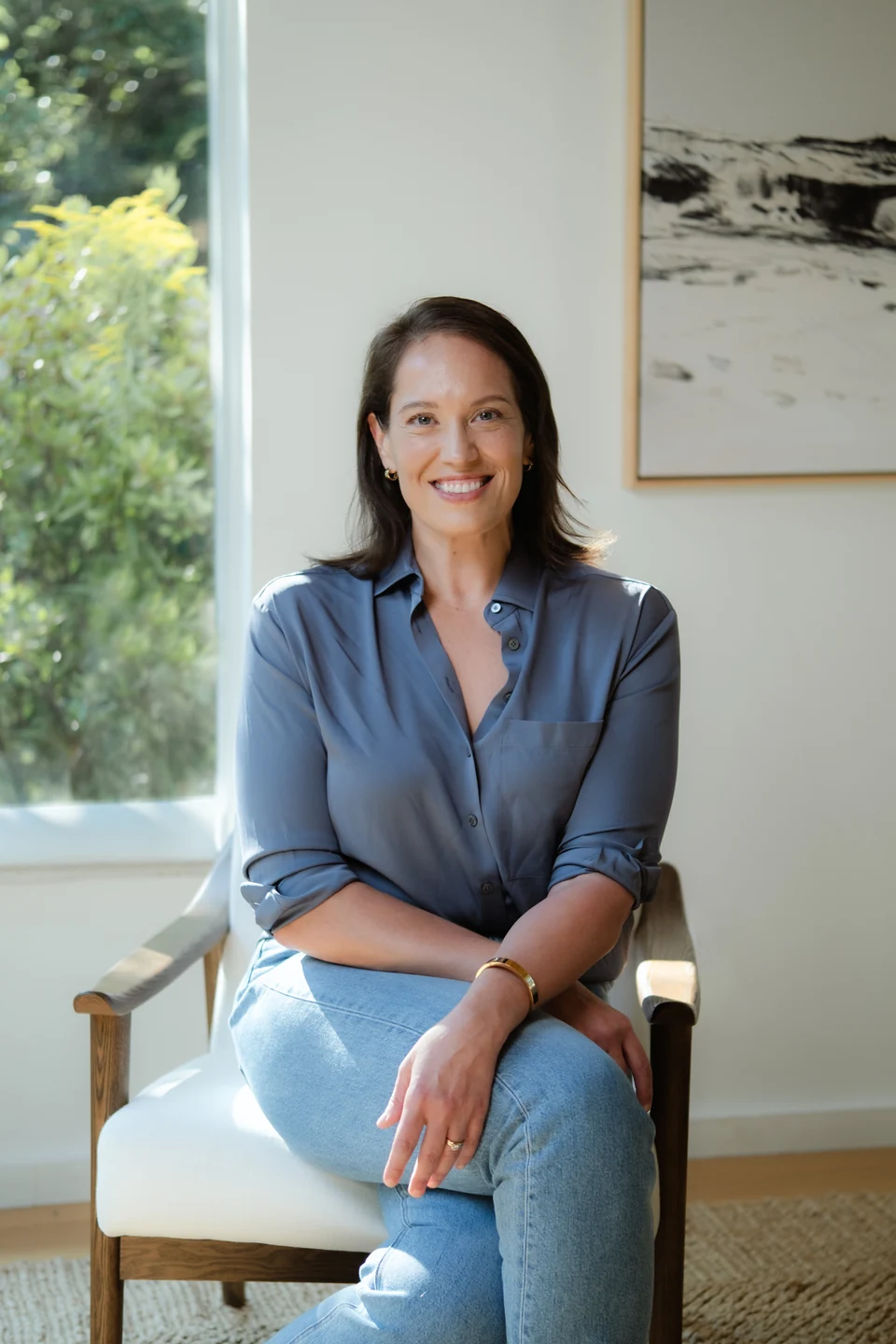
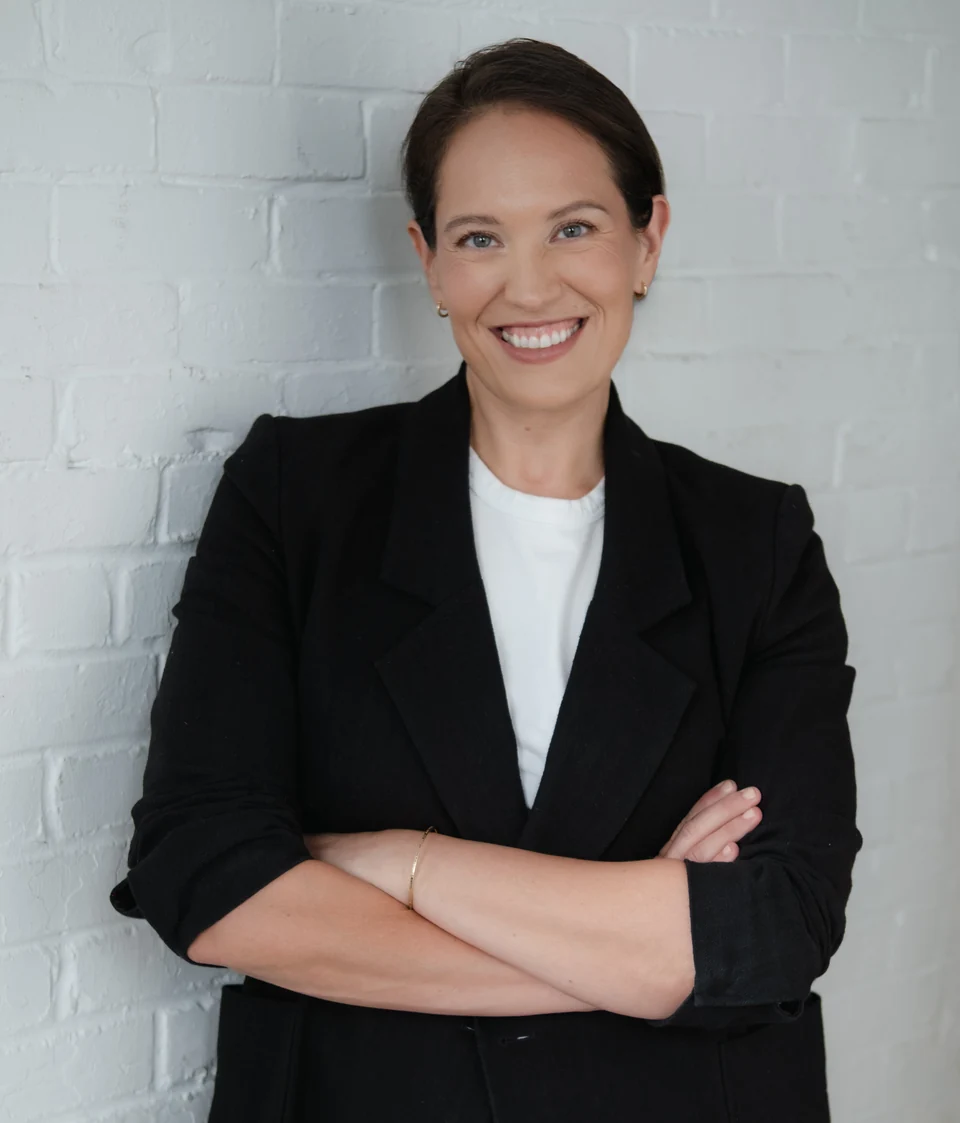
Annie Wright, LMFT — Licensed psychotherapist and trauma-informed executive coach
About the author

Annie Wright, LMFT

Licensed Marriage & Family Therapist · Relational Trauma Specialist · W.W. Norton Author

In my 15,000+ clinical hours working with driven, ambitious people — Silicon Valley executives, physicians, founders, and high-performing professionals — I've sat with a very specific kind of confusion: the confusion that follows a relationship where the harm was never obvious enough to explain, but felt relentless enough to flatten you. I built this course because that experience has a clinical name, a clinical mechanism, and a clinical recovery path — and most of the content available doesn't get specific enough to be useful.

I'm a licensed psychotherapist (LMFT #95719) and trauma-informed executive coach. I'm the founder and former CEO of Evergreen Counseling, a multimillion-dollar trauma-informed therapy center I built, scaled, and successfully exited. I'm a regular contributor to Psychology Today, and my expert commentary has appeared in Forbes, Business Insider, Inc., NBC, and The Information. I'm currently writing my first book with W.W. Norton.

15,000+ Clinical Hours
10 State Licenses
W.W. Norton Author
Featured in Psychology Today Forbes Business Insider Inc. NPR NBC
Questions you're asking yourself

The honest answers.

Tap any question to read the answer

Does the person I was with need a diagnosis for this course to apply? +
No. Most people who cause this kind of harm never receive a formal diagnosis — and a clinical label isn't what determines whether your experience was real. What matters is whether the pattern described in this course resonates with what you lived: the ambient wrongness, the self-doubt that seemed to come from inside you but was systematically installed, the exhaustion of monitoring someone who was never overtly cruel. If that fits, this course was built for you.
What if I'm not sure what happened was actually covert narcissism? +
You don't need to be certain. This course isn't about labeling your former partner — it's about understanding a specific pattern of relational harm and what it does to your perception, your nervous system, and your self-trust. If the clinical picture described in this course matches your lived experience, that's what matters. Many people who take this course never receive external confirmation about what they were dealing with. That confirmation isn't the goal. Clarity about your own experience is.
I still have complicated feelings for this person. Does that mean I'm in the wrong place? +
No. The Both/And framework in this course is built specifically for that complexity. You can love someone and name the harm. You can miss the relationship you thought you had and understand what the relationship you actually had did to you. Complicated feelings aren't a disqualifier — they're a sign that you're being honest about something genuinely complicated. This course will help you hold that complexity without collapsing into a simpler story that doesn't serve you.
How is this different from standard narcissistic abuse recovery content? +
Significantly. Most narcissistic abuse content is built around overt narcissistic behavior — dramatic, recognizable, easy to name. Covert narcissism operates differently: through withdrawal, quiet contempt, plausible deniability, and a presentation that looks entirely reasonable to the outside world. The recovery map for that specific experience is different — particularly around the perceptual damage gaslighting causes and the work of rebuilding trust in your own perception. This course addresses that specificity directly.
Is this therapy? +
No. This is a psychoeducational course. It's not a substitute for individual therapy, and Annie is not your therapist through this material. What it provides is the clinical framework, the vocabulary, the neurobiology, and the recovery map — structured education that can work powerfully alongside therapy, or as an accessible starting point for people who aren't yet in therapy. Many clients find that working through this course first helps them use their therapy sessions more efficiently: they arrive already holding the map.
Is this safe for me if I'm still in contact with this person? +
This is an important question. If you're still actively in the dynamic — or in situations where no-contact isn't possible, such as co-parenting or shared workplaces — this material may surface difficult feelings at a time when your capacity to work through them is limited. The course can still be valuable in those situations, and it works best alongside therapeutic support. If you're in acute crisis or need immediate safety support, please connect with a mental health professional before enrolling.
How long do I have access? +
Lifetime. Recovery isn't linear, and neither is this kind of learning. You might move through a module once and return to it six months later when something clicks differently. You might revisit the gaslighting framework when a new relationship triggers an old question. Lifetime access means this course stays with you for as long as you need it.
Join the Waitlist

Already on Annie's email list? You're not automatically on this waitlist — add yourself above.

If you've read this far

The fog has a name. Now it has a map.

What you survived is specific. Your healing deserves that specificity. The waitlist is open now — join it and you'll be among the first to know when the course becomes available.

Add Yourself to the Waitlist

$197 · Self-paced · Lifetime access