



The Biological Clock Is Real. And It’s Also a Social Construct
Age related fertility decline is real and documented. So is the cultural machinery that turns a gradual biological pattern into a countdown you can hear in your chest at 5 a.m. In my work with driven women in their late thirties and early forties, I help clients separate the two so they can make a decision instead of just managing a panic. This is education, not medical advice, and it’s not a substitute for a conversation with a reproductive health clinician about your body specifically.
- 5:11 a.m., and the Numbers Won’t Stop Talking
- What the Biological Clock Actually Is, Medically
- What Bernice Neugarten Named Fifty Years Before Instagram
- How the Two Clocks Get Fused Into One Alarm
- Both/And: Your Ovaries Age and Your Culture Is Loud
- The Systemic Lens: Whose Clock Gets to Set the Pace
- The Grief That Panic Is Standing In Front Of
- Fear Versus Intuition, and Why the Difference Matters
- Where Therapy Ends and Medicine Has to Begin
- Frequently Asked Questions
5:11 a.m., and the Numbers Won’t Stop Talking
Latia is awake at 5:11 a.m., which she knows because she has checked her phone four times in the last twenty minutes, each time telling herself it’ll be the last. She’s 43, a partner at a mid-sized architecture firm, the person junior staff describe as “unflappable” in performance reviews she’s not supposed to have seen. The phone screen lights her face blue in the dark. She’s not checking email. She’s reading, again, an article she has already read twice this month about egg quality and maternal age, the kind of article that states a statistic in the first sentence and then repeats it, reworded, four more times before the ads start.
Her partner is asleep beside her. The dog is asleep at the foot of the bed. The refrigerator hums downstairs, the only other sound in the house. Last night at her sister’s birthday dinner, an aunt she sees twice a year leaned across the table, refilled her own wine, and said, “Well, you know, the clock is ticking,” in the specific tone people use when they think they’re being helpful. Latia had laughed it off at the table. She’s not laughing now. The comment has lodged somewhere behind her sternum, and it’s still there at 5:11 a.m., keeping time with her pulse.
In my work with clients like Latia, driven women in their late thirties and early forties who have spent two decades being competent on command, I see this exact scene more often than almost any other. Not the wanting itself. The 5 a.m. arithmetic. The way a real, physiological fact about reproductive aging gets tangled up with a dinner-table comment, a scroll session, and a decade of unspoken cultural messaging, until the woman sitting across from me can no longer tell where the biology ends and the noise begins.
Here’s what I want to say plainly, before we go any further, because I think it’s the most useful sentence in this entire piece. The biological clock is real. Fertility does decline with age, and the decline isn’t evenly distributed across a woman’s thirties and forties. And the panic that gets attached to that fact, the sense of a bomb ticking under your ribs, the feeling that you have to decide everything by next Tuesday, is a social phenomenon layered on top of a biological one. Both/and, not either/or. You don’t have to choose which one is true, because they both are, and they operate on different timelines than the ones in your head at 5 a.m.
What the Biological Clock Actually Is, Medically
Let’s start with the clinical concept, because I think clarity here’s a form of kindness. What clinicians call age related fertility decline refers to the gradual reduction in both the number and the quality of a woman’s eggs as she ages, a process that begins well before menopause and accelerates in the mid-to-late thirties. According to the American College of Obstetricians and Gynecologists, fertility declines gradually starting in the early thirties and more steeply after 35, with corresponding increases in the time it takes to conceive and in certain pregnancy related risks.
The number of eggs remaining in a person’s ovaries at a given point in time, a figure that declines steadily across the reproductive lifespan and is measured clinically through blood tests and ultrasound, most commonly by a reproductive endocrinologist.
In plain terms: Think of it less like a countdown clock and more like a savings account that was never going to be unlimited to begin with. It started large, it draws down over time, and the rate of withdrawal picks up in your mid-to-late thirties. The only way to know your specific balance is to have it checked. A headline can’t check it for you.
Here’s the layer I think gets skipped in most of the articles Latia was reading at 5 a.m. That statistic, the one about fertility dropping after 35, describes a population, not a person. It’s an average drawn from millions of women, and averages are true in aggregate and unreliable in the specific. Two 38 year olds can have very different ovarian reserves, different histories, different partners’ fertility factors, different paths ahead of them. What this looks like in practice, in my office, is a woman who has memorized a statistic about “women over 35” as though it were a diagnosis of her own body, when in fact she has never had her own ovarian reserve tested. The statistic is real. It’s also not about her, specifically, until a clinician looks at her specific labs.
I want to be direct about the edges of what I can offer here, because this distinction matters clinically and ethically. I’m a marriage and family therapist, not a reproductive endocrinologist. I can’t diagnose infertility, I can’t tell you your odds of conceiving, and I’m not going to pretend otherwise anywhere in this article. What I can do, and what I’ve spent thousands of clinical hours doing, is help a driven woman tell the difference between a medical question that belongs with a specialist and an emotional one that belongs with me. Those two questions get fused together constantly, and untangling them is often the actual work.
What Bernice Neugarten Named Fifty Years Before Instagram
A few years ago, I came across a concept from mid-century sociology that reorganized how I think about almost every client who has ever sat across from me holding a version of Latia’s 5 a.m. spreadsheet. Bernice Neugarten, PhD, was a social psychologist at the University of Chicago who spent decades studying how adults experience aging, and in a 1965 paper in the American Journal of Sociology, she and her co-authors named something she called the social clock. Neugarten’s argument was that every culture maintains an internalized timetable, mostly unspoken, that tells its members when they’re supposed to finish school, marry, have children, and retire. People who hit these milestones when their culture expects them to, she found, describe themselves as “on time.” People who don’t often describe themselves as behind, even when nothing about their actual life has gone wrong.
I haven’t been able to stop thinking about this since I read it, because it names something I watch happen to driven women every single week, just usually about fertility rather than marriage or career. The phrase that stayed with me from Neugarten’s later writing is her observation that age norms function as “prods and brakes” on behavior, quietly speeding some people up and slowing others down regardless of what their actual bodies or circumstances require. That’s precisely what I see in session. A client’s own body hasn’t sent her an urgent message. Her culture has, and her nervous system can’t always tell the difference.
“I felt a Cleaving in my Mind. As if my Brain had split. I tried to match it. Seam by Seam. But could not make them fit.”
Emily Dickinson, poet
Think of the social clock like a second clock hanging on the wall next to the biological one, except this second clock was built by your extended family, your hometown, the decade you were born in, and every fertility headline you have ever scrolled past at 11 p.m. It keeps its own time. Sometimes it runs fast, sometimes slow, and it’s almost never checked against your actual medical reality before it starts ringing. What this means in your life, practically, is that you can be lying awake at 5 a.m. responding to an alarm that has nothing to do with your ovarian reserve and everything to do with your aunt’s wine-fueled comment at dinner. Both clocks are real. Only one of them can be measured with a blood draw.
How the Two Clocks Get Fused Into One Alarm
Simone came to see me at 39, a marketing director who had spent the better part of a decade telling people, cheerfully and with total conviction, that she wasn’t sure she wanted children at all. “I have never had the pull,” she told me in our first session, sitting very upright on my couch, hands folded like she was bracing for a verdict. “And now everyone acts like I’m supposed to be panicking about it, and some days I start to wonder if I should be panicking, even though nothing in me has changed.”
What had changed wasn’t Simone’s desire. What had changed was the volume of messages arriving from outside her, each one implying that her ambivalence had an expiration date. A cousin’s pregnancy announcement in the family group chat. A doctor’s routine comment at her annual physical, “you’re not getting any younger,” delivered with a smile and zero clinical context. A targeted ad for egg freezing that followed her across three different apps for a week. None of these were medical facts about Simone’s specific fertility. All of them were engineered, consciously or not, to make her feel that a clock she had never fully believed in was suddenly, urgently, hers to solve.
Sitting with Simone that first session, I felt the particular tightness I’ve come to associate with clients whose ambivalence is being treated by everyone around them as a countdown. Not confusion about what she wanted. Confusion about whether she was allowed to still not know at 39. I’ve come to think of this as the borrowed urgency pattern, when a woman internalizes someone else’s timeline as though it were generated by her own body, and then can no longer locate her own voice underneath it.
Research on this exact tension exists, and it’s worth naming directly rather than gesturing at vaguely. A 2025 study by Ivett Szalma, Mila Heers, and Maria Letizia Tanturri, published in PLoS One, examined how attitudes toward voluntary childlessness are measured across European surveys and found that social stigma around the choice not to have children remains a documented, measurable phenomenon, separate from any individual’s actual reproductive biology. That distinction is the one I return to with clients like Simone again and again. The stigma is sociological. The ovarian reserve is physiological. They’re not the same conversation, even though they arrive in the same body at the same 2 a.m.
Both/And: Your Ovaries Age and Your Culture Is Loud
I want to name the both/and directly, because I think the entire article so far has been building toward this specific sentence. Your ovaries are aging on a real biological timeline, and the culture around you is producing pressure on its own separate timeline, and treating these as a single combined countdown is where most of the suffering I see in my office actually comes from.
I also want to name something that gets lost when people try to resolve this tension by picking a side. Some clients, once they learn that social pressure is real and measurable, want to conclude that the biology must therefore be exaggerated, that the whole thing is “just” cultural noise. I understand the appeal of that conclusion. It’s also not accurate, and I’m not going to tell a client something inaccurate because it feels better in the short term. The decline in ovarian reserve with age is well documented in the reproductive medicine literature and isn’t primarily a cultural construction. What’s culturally constructed is the meaning attached to that decline, the moral weight, the sense that a woman who hasn’t “solved” her fertility by a certain age has failed at something.
Here’s what holding both looks like in an actual session. When Latia first started naming her 5 a.m. spirals, I didn’t tell her the fertility statistics were wrong, and I didn’t tell her the panic was silly. I said something closer to this: your body has a real timeline, and it’s worth understanding accurately, ideally with a reproductive endocrinologist who can look at your specific labs. Separately, the panic you feel at 5 a.m. has a source too, and that source isn’t always your ovaries. Sometimes it’s an aunt’s comment. Sometimes it’s a scroll session. Sometimes it’s watching your own mother’s story land on you sideways. Both of those threads need real attention. Neither one cancels the other out.
Of course this feels disorienting. You have spent your whole adult life being told, implicitly, that competence means having one clear answer. The both/and of biological reality and social construction doesn’t offer you one clear answer. It offers you two true things that have to be held at the same time, which is a harder and, I’d argue, more honest place to stand than the false comfort of picking a side.
The Systemic Lens: Whose Clock Gets to Set the Pace
Zoom out from any one woman’s 5 a.m. spiral and a pattern comes into view that’s bigger than any individual’s psychology. The urgency around the biological clock doesn’t fall evenly across every body it touches. It falls hardest on women who have spent their twenties and early thirties doing exactly what they were told would secure a stable adult life, building a career, establishing financial independence, finding a partner worth staying with, only to discover that the timeline for “doing it right” professionally and the timeline for “doing it right” reproductively were never actually compatible in the first place.
This isn’t an accident of individual planning. It reflects a structural mismatch between how workplaces, healthcare systems, and family-leave policy are built and how reproductive biology actually functions. A driven woman who spent her twenties in graduate school, her early thirties establishing herself at a firm, and is now facing partnership review at 38 hasn’t made a series of personal errors. She has been operating inside two systems, a career ladder built around decades of steady, uninterrupted output, and a fertility timeline that doesn’t extend a grace period for professional readiness, and almost no one told her out loud that these two systems were on a collision course until she was already living the collision.
The pressure also lands unevenly by economic circumstance. Egg freezing, IVF, and other assisted reproductive technologies exist as options for extending the biological timeline, but they’re expensive, unevenly covered by insurance, and geographically inconsistent in access. A woman with resources has more room to decide slowly. A woman without them is handed the same 5 a.m. panic and a much narrower set of tools to respond to it. Naming this isn’t a distraction from the biology. It’s part of an accurate account of why the biology feels so much more frightening to some women than others, even when their actual ovarian reserve numbers might be identical.
What this looks like in a Tuesday-afternoon life is a woman comparing her fertility timeline to her mother’s or grandmother’s, without accounting for the fact that her mother likely married and had children a decade earlier, inside a labor market and a family-leave structure that no longer exists in the same form. The biology hasn’t changed dramatically across generations. The surrounding systems have changed enormously, and the mismatch between the two is what a lot of my clients are actually grieving, even when they describe it to me as being about their eggs.
The Grief That Panic Is Standing In Front Of
In my clinical experience, panic is rarely the deepest thing in the room. It’s usually the thing standing in front of the deepest thing in the room, doing a very effective job of keeping everyone, including the client herself, from looking directly at what’s underneath. With Latia, the panic about egg quality was real. Underneath it, once we had slowed down enough to find it, was a quieter grief about a decade she had spent building a career she’s proud of, at the cost of a relationship that ended at 34, and a specific, unspoken fear that she had traded one kind of life for a shot at another kind of life, and that the trade might not have been fully hers to make.
This is where I think a concept from Internal Family Systems earns its place, not as a replacement for medical information but as a way of understanding why the panic is so loud. Richard Schwartz, PhD, the psychotherapist who developed the Internal Family Systems model, writes that even a person’s most frightened, most reactive internal parts are trying to protect them, and that the work isn’t to silence those parts but to understand what they’re afraid will happen if they stop shouting. “There are no bad parts,” Schwartz writes, and I think about that sentence often with clients whose 5 a.m. panic has started to feel, to them, like evidence of some personal failure to be calm. The panic isn’t the failure. The panic is a part of her trying, clumsily, to make sure she doesn’t miss something that matters to her.
Maternal ambivalence belongs in this conversation too, because it’s so often mistaken for indecision rather than named as its own legitimate, survivable state.
The simultaneous presence of desire, doubt, longing, and grief in a person considering or experiencing motherhood, first named clinically by Jane Lazarre in The Mother Knot and explored more recently by Sheila Heti in her book Motherhood, who frames the ambivalence itself as an honest inquiry rather than a character flaw.
In plain terms: Wanting a child and not wanting a child can live in you at the same time, some weeks in equal measure, and that’s not a sign that something is broken in you. It’s a sign that the decision is as large as it feels.
What this looks like in a client’s actual week isn’t a dramatic breakdown. It’s more often a low, persistent hum of distraction, difficulty sleeping the night before an ovulation-tracking app sends its monthly notification, a short temper with a partner who asks an innocent question at dinner, a habit of closing browser tabs quickly when a coworker walks by. The grief is doing its work quietly, in the margins of an otherwise fully functioning life, which is exactly why it so often gets mistaken for anxiety about eggs rather than recognized as grief about a decade, a relationship, or a version of adulthood that didn’t unfold the way she expected.
Fear Versus Intuition, and Why the Difference Matters
One question I get from clients almost verbatim, across a decade of practice, is some version of: how do I know if this is fear or if this is my actual intuition telling me something true? I don’t think there’s a universal test, but I do have a distinction I offer, drawn from what I watch happen in the body during each state. Fear, in my clinical observation, tends to spike sharply in response to an external trigger, a headline, a comment, a friend’s announcement, and it tends to settle within a day or two once the trigger passes. It also tends to speak in absolutes: never, too late, ruined, behind. A steadier internal signal, the kind worth taking seriously as information rather than noise, tends to persist across calm days as well as activated ones, and it tends to speak in more specific, less catastrophic language.
I want to be careful here, because I’m not a physician and this distinction is psychological, not medical. It won’t tell you your ovarian reserve number. It won’t tell you whether IVF is right for you. What it can do is help you figure out which conversations you need to have next, and with whom. A spike of fear after doomscrolling at midnight is a conversation to have with yourself, maybe with me, about what triggered it and what it’s protecting. A steady, specific concern about your own fertility, rooted in your own age, your own family history, your own body, is a conversation to have with a reproductive endocrinologist, ideally soon, because that’s the person equipped to actually assess it.
Of course you’re tired. Managing two clocks at once, one biological and one social, while also running a demanding career and a full adult life, is exhausting in a way that rarely gets acknowledged out loud. You’re not imagining how hard this is. You’re not failing at some test of composure that everyone else seems to be passing. You’re metabolizing a disorienting piece of information under a disorienting amount of cultural pressure, and the fatigue that comes with that’s not a character defect. It’s an accurate response to a real load.
Where Therapy Ends and Medicine Has to Begin
I want to close this section with a line I hold carefully, because I think blurring it would be a disservice to every reader of this piece. Therapy is an excellent place to sort through the emotional weight of fertility timing, the grief, the relational strain, the family-of-origin echoes, the borrowed urgency, the question of what you actually want underneath what you’ve been told to want. Therapy isn’t the place to get a fertility diagnosis, an odds calculation, or a recommendation about egg freezing, IVF, or any other medical intervention. That work belongs with a board-certified reproductive endocrinologist, and I refer clients out for exactly that conversation regularly, usually with relief on both sides.
A 2026 paper by Lisa Buchinger and colleagues, published in the Journal of Personality, examined how a mismatch between a person’s actual and desired fertility relates to well-being across adulthood, and found that the mismatch itself, not simply the outcome, was associated with real, measurable shifts in life satisfaction. I find this useful clinically because it validates something I already see constantly in session: it’s not only “did you have the number of children you wanted” that affects a woman’s well-being, it’s the felt experience of the gap between plan and reality, which is exactly the terrain therapy is built to hold, even when the underlying medical facts require a different kind of expert entirely.
When Latia and I reached the end of our work together on this specific question, she hadn’t resolved the biological facts, because that was never mine to resolve. She had scheduled an appointment with a reproductive endocrinologist to get an actual ovarian reserve test, something she had been avoiding for two years because she was afraid of the number. She had also started sleeping through most nights, because the 5 a.m. panic had lost some of its grip once she stopped asking it to answer a medical question it was never equipped to answer. Simone, for her part, is still not certain whether she wants children, and at 39 she has stopped treating that uncertainty as an emergency. She froze a round of eggs, not because a headline told her to, but because it kept a door open while she kept living her actual life. Neither outcome is a template. Both are honest.
Q: Is the biological clock real, or is it just cultural pressure?
A: Both are true at once. Age related fertility decline is a documented physiological reality, and the panic that gets attached to it’s a social phenomenon layered on top. You don’t have to pick a side to take your own timeline seriously.
Q: At what age does fertility actually start to decline?
A: According to the American College of Obstetricians and Gynecologists, fertility gradually declines starting in the early thirties, with a steeper decline after 35. This is a population level pattern, not a countdown clock installed in any one individual body, and it says nothing about your specific ovarian reserve without testing.
Q: How do I know if my urgency is fear or a real deadline?
A: In my practice, I ask clients to separate the sensation from the source. Fear that spikes after scrolling, an offhand comment from a relative, or a friend’s announcement usually settles within a day or two. A concern rooted in your actual age, your actual health history, and your actual desires tends to stay steady. Neither one is shameful, but they call for different responses.
Q: What if my partner and I aren’t on the same timeline?
A: This is common, and it’s workable. I encourage couples to separate the medical facts, which a reproductive endocrinologist can speak to directly, from the emotional and relational facts, which are the proper territory of a therapist. Naming both out loud, in the same conversation, tends to reduce the sense that one partner is the problem.
Q: Should I freeze my eggs?
A: I can’t answer that for you, and neither can this article. It’s a medical and financial decision that depends on your age, your ovarian reserve, your finances, and your values, and it belongs in a conversation with a reproductive endocrinologist. What I can help with is the anxiety and the family history underneath the question.
Q: Is it too late for me?
A: I hear this question often, and I want to be direct about its limits. I’m not a physician, and I can’t assess your fertility. What I can tell you is that this question needs a real answer from a reproductive health clinician, based on your actual labs and history, not a probability drawn from a headline.
Research & Evidence
This article draws on peer-reviewed research on fertility, reproductive well-being, and social attitudes toward childbearing, alongside clinical guidance from the American College of Obstetricians and Gynecologists. Selected references:
- Szalma I, Heers M, Tanturri ML (2025). Measuring attitudes towards voluntary childlessness: Indicators in European comparative surveys. PLoS One.
- Malamitsi-Puchner A, Briana DD, Di Renzo GC (2026). Voluntary childlessness in high-income countries: the impact of lifestyle and self-fulfillment choices. The Journal of Maternal-Fetal & Neonatal Medicine.
- Uğur SB, Yasan-Ak N, Çiçekli A, et al. (2026). How Mothers and Childfree Women Redefine Fulfillment: A Comparative Study of Life and Marital Satisfaction in a Pronatalist Society. International Journal of Environmental Research and Public Health.
- Buchinger L, Krämer MD, van Scheppingen MA, et al. (2026). How a Mismatch Between Actual and Desired Fertility Relates to Well-Being Across Adulthood. Journal of Personality.
- American College of Obstetricians and Gynecologists. Having a Baby After Age 35: How Aging Affects Fertility and Pregnancy.
Warmly, Annie
WAYS TO WORK WITH ANNIE
Individual Therapy
Trauma-informed therapy for driven women healing relational trauma. Licensed in 15 U.S. jurisdictions, including Colorado (telehealth only), and registered to provide telehealth in Florida.
Trauma-informed coaching for driven women moving through leadership and burnout.
Annie’s signature course for relational trauma recovery. Work at your own pace.
Essays
Hundreds of long-form essays on childhood patterns, relational dynamics, and building a life that actually feels good. Free to read.
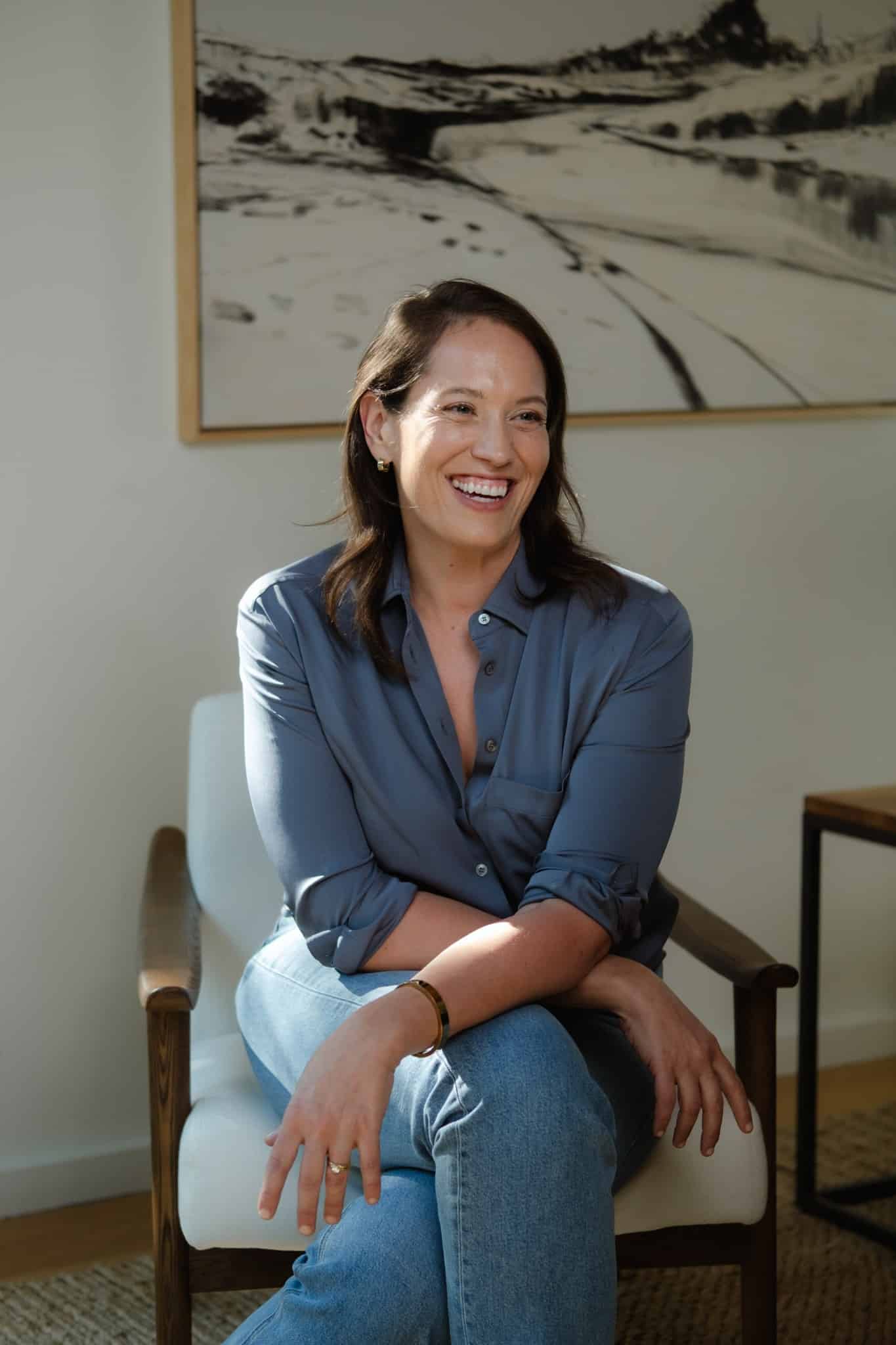
Annie Wright, LMFT
LMFT · Relational Trauma Specialist · Author, W.W. Norton 2027
Helping driven women finally feel as good as their résumé looks.
Annie Wright is a licensed psychotherapist (LMFT #95719) and trauma-informed executive coach with over 15,000 clinical hours. She works with driven women, including Silicon Valley leaders, physicians, and entrepreneurs, in repairing the psychological foundations beneath their impressive lives. Annie is the founder and former CEO of Evergreen Counseling, a multimillion-dollar trauma-informed therapy center she built, scaled, and successfully exited. A regular contributor to Psychology Today, her expert commentary has appeared in USA Today, Forbes, Business Insider, NBC News, and The Information. She’s currently writing her first book with W.W. Norton.
Licensed Marriage and Family Therapist (LMFT #95719)
15,000+ direct clinical hours
CA LMFT95719 · CO MFT.0003236 (telehealth only) · CT 003806 · DC LMFT200001447 · FL TPMF356 (out-of-state telehealth registration) · IL 166.012270 · ME MF8600 · MD LCM1206 · NH 1030 · NJ 37FI00254800 · NY 002805 · TX 206391 · UT 14300323-3902 · VA 0717002589 · WA MFT.LF.70098096
Creator of House of Life™ and Fixing the Foundations™
The Everything Years (W.W. Norton)
Founder & former CEO, Evergreen Counseling
Regular contributor to Psychology Today. Expert commentary has appeared in USA Today, Forbes, Business Insider, NBC News, and The Information.
