✓ CLINICALLY REVIEWED BY ANNIE WRIGHT, LMFT · APRIL 2026
99 Uplifting Quotes to Spark Your Soul and See You Through Hard Times
Hard times are universal — but the words that help us through them are timeless. This curated collection of 99 uplifting quotes on resilience, grief, healing, and perseverance was gathered for the moments when you can’t find your own words. Each quote was chosen for its emotional truth, not its empty optimism. Bookmark it, return to it, and share it freely.
- It’s 2 AM, and You’re Searching for the Right Words
- Why Words From Others Can Reach You When Your Own Can’t
- The Neuroscience of Why Language Heals
- When Quotes Become a Coping Strategy (And a Survival Kit)
- Why Driven Women Often Reach for Other People’s Words
- Both/And: Holding Yourself Together AND Letting Words Reach You
- The Systemic Lens: Why We Don’t Give Ourselves Permission to Be Moved
- How to Use This List (A Gentle Invitation)
- 99 Uplifting Quotes
- Frequently Asked Questions
It’s 2 AM, and You’re Searching for the Right Words
Camille remembers the exact night. She was lying in the dark — really in it — phone glowing against her face, the rest of the apartment completely quiet. She’d just gotten off a call with her sister that hadn’t gone well. Her chest felt like something was sitting on it. She couldn’t find the words for what she was feeling, and somehow that made the whole thing worse.
She typed something vague into the search bar. Something like “quotes when everything feels too hard.” She wasn’t really expecting much. But she scrolled until she hit a line from Rainer Maria Rilke: “Be patient toward all that is unsolved in your heart and try to love the questions themselves.” She read it twice. Then a third time. And something in her — some small, tight thing — loosened just slightly.
She didn’t feel fixed. She didn’t feel fine. But she felt less alone. And sometimes, at 2 AM in the dark, that’s exactly what you need.
If you’re here right now, searching for words because yours have run out — I see you. This list was made for you. Whether you’re in the middle of betrayal trauma, a slow-burning burnout, a relationship rupture, or just a season that doesn’t have a name — there’s something here for you.
Why Words From Others Can Reach You When Your Own Can’t
There’s something clinically significant about what happens when a quote lands for you. It isn’t coincidence, and it isn’t just comfort. Language itself is a neurological tool. In his seminal work The Body Keeps the Score, Bessel van der Kolk, MD, psychiatrist and trauma researcher, writes about how trauma and overwhelming emotion can shut down the brain’s language centers — leaving us literally wordless, unable to name or process what’s happening inside us.
When someone else’s words articulate something we couldn’t, we borrow their language to build a bridge back to ourselves. This is part of why poetry has been used therapeutically for centuries — and why the right line from a poet you’ve never met can stop you cold in a way that a friend’s well-meaning reassurance sometimes can’t.
In my work with clients, I’ve seen this over and over. A woman in the middle of grief who can’t explain what she’s feeling reads a single line from a poem and starts to cry — not because she’s sadder, but because she’s finally been met. The quote didn’t fix anything. But it named it. And naming things matters enormously in the healing process.
This is why quotes, poems, and borrowed language aren’t shallow comfort. They’re one of the oldest therapeutic tools humans have ever used. And there’s no shame in reaching for them — especially when you’re also doing the deeper work of trauma-informed therapy.
AFFECT REGULATION
Affect regulation refers to the conscious and unconscious processes by which individuals modulate the intensity, duration, and expression of emotional states. Daniel Siegel, MD, clinical professor of psychiatry at UCLA and author of The Developing Mind, describes healthy affect regulation as the capacity to feel emotions fully without being overwhelmed by them — to experience and express feelings without those feelings taking over functioning.
In plain terms: It’s your ability to feel something hard — grief, rage, despair — without completely losing yourself inside it. When your own regulation is strained, outside tools like language, poetry, and borrowed words can serve as an external scaffold that holds you while your nervous system settles.
The Neuroscience of Why Language Heals
Daniel Siegel, MD, clinical professor of psychiatry at UCLA and author of The Developing Mind, has written extensively about the concept he calls “name it to tame it” — the act of putting words to emotional experience activates the prefrontal cortex, which helps regulate the amygdala’s alarm response. In other words, language doesn’t just describe what we’re feeling. It actually changes what we’re feeling, neurologically.
When trauma or overwhelm has left you wordless, someone else’s language can do this for you. A well-chosen quote can activate the same neurological process as finding your own words — borrowing external articulation to achieve internal regulation. This is why reading poetry during a hard season isn’t escapism. It’s actually a neurologically grounded self-care practice.
Bessel van der Kolk, MD, has also documented how trauma disrupts the nervous system’s capacity to integrate experience — and how narrative and language are central to the healing process. Telling the story, even borrowing someone else’s story as a proxy, is part of how the brain moves from overwhelmed to integrated.
“I felt a Cleaving in my Mind — As if my Brain had split.”
EMILY DICKINSON, Poet, c. 1864
Dickinson wrote that in the 1800s, and yet if you’ve ever been in the middle of a breakdown, a loss, or an episode of overwhelm — you probably recognize it immediately. That’s the power of language that tells the truth. It doesn’t require explanation. It just knows. And in that recognition, something in the nervous system exhales.
RESILIENCE
Resilience is the capacity to withstand, adapt to, and recover from adversity — not by avoiding pain but by developing the internal and relational resources to metabolize it. True resilience is not toughness or stoicism; it is the ability to feel fully, grieve honestly, seek support, and continue growing in the aftermath of difficulty. Psychological research, including work by Ann Masten, PhD, developmental psychologist at the University of Minnesota, has established resilience not as a fixed trait but as a set of learnable skills and capacities.
In plain terms: Resilience isn’t about not falling apart. It’s about being able to fall apart and still find your way back. You’re not failing at hard times because you’re struggling. You’re doing the thing resilience actually requires.
[aw_optin form=”47″ label=”FREE GUIDE” headline=”A Reason to Keep Going — For Anyone Who Needs One Right Now” body=”25 pages of what I actually say to clients when they are in the dark. Somatic tools, cognitive anchors, and 40 grounded, honest reasons to stay. No platitudes.” button=”Send Me the Guide”]
When Quotes Become a Coping Strategy (And a Survival Kit)
Priya is the kind of woman who has it together — at least from the outside. Senior manager at a tech company, close to her family, someone her friends describe as “the strong one.” She’s also been quietly managing anxiety for most of her adult life, the kind that lives behind the eyes and never fully goes quiet.
A few years ago, she started keeping a quotes folder on her phone. Not an app, not a journal — just a folder in her Notes, full of screenshots and typed-out lines she’d collected over years. There’s a Mary Oliver line in there about paying attention. A verse from Warsan Shire she found during a particularly hard season. A few lines from Toni Morrison that she’s returned to so many times they’ve worn grooves.
She doesn’t tell many people about the folder. But when things get hard — a difficult conversation with her mother, a stretch of bad sleep, a moment when she can feel herself starting to unravel — she opens it. She reads slowly. And something in her steadies.
What Priya built, without labeling it as therapy or coping or a practice, is a form of what psychologists call an “affect regulation strategy.” She created, piece by piece, a portable container for her emotions. I think that’s remarkable. And I think it’s more common than we talk about — which is part of why posts like this one exist.
If you’re a driven woman who’s ever used a quote to get through something — you’ve been your own therapist in a way. You identified a tool, you deployed it at the right moment, and it worked. That’s worth naming. If you’re curious about doing that more intentionally — whether through individual therapy, executive coaching, or a structured program like Fixing the Foundations — there’s a deeper version of this work available to you.
Why Driven Women Often Reach for Other People’s Words
There’s a particular kind of pressure that lives inside driven, ambitious women — and it has everything to do with the expectation of self-sufficiency. If you’ve spent years being the person who handles things, who figures it out, who keeps going — there’s often an invisible rule that says: you shouldn’t need outside help to feel okay.
That rule doesn’t usually get spoken out loud. But it operates. And it can make it genuinely difficult to reach toward comfort or permission in a way that feels safe. Asking a friend for help — really asking, vulnerably — can feel too risky. Admitting in therapy that things are hard can feel like conceding something. But reading a poet’s words in the dark? That feels safer. No one has to know. Nothing is being admitted. You’re just reading.
In my work with clients, I’ve noticed that driven women often give themselves permission to feel things through other people’s words that they can’t grant themselves directly. A quote about grief lands in a way that a friend saying “it’s okay to be sad” doesn’t — because the quote comes with no social weight, no expectation of response, no vulnerability hangover.
This pattern is also related to what researchers call childhood emotional neglect — when we grew up in environments where our feelings were minimized or dismissed, we learn to feel things sideways, through the safer proxy of someone else’s experience. If that resonates, it’s worth exploring more deeply.
BIBLIOTHERAPY
Bibliotherapy is the use of literature — including poetry, prose, and narrative — as a therapeutic tool to support emotional processing, self-understanding, and healing. It has roots in both ancient Greece and modern clinical psychology, and is used by therapists to help clients access emotional material that is difficult to approach directly. Research published in the Journal of Poetry Therapy has documented its effectiveness in reducing anxiety and facilitating emotional processing in clinical populations.
In plain terms: Reading words that name what you’re feeling — and letting yourself be moved by them — is a legitimate healing practice, not a passive substitute for “real” help. If a poem gets you through the night, that counts.
Both/And: Holding Yourself Together AND Letting Words Reach You
Here’s something I want you to hold: it doesn’t have to be one or the other. You don’t have to choose between staying functional and letting yourself be moved. Both can be true at the same time.
You can hold yourself together at work, be present with your kids, keep all the plates spinning — and allow a poem to cut straight through you at night. You can maintain the composure that your life requires and also have a moment in your car, in the parking lot before you go inside, where something breaks open just a little and that’s okay.
The “both/and” is important here. So much of what I work on with clients is releasing the idea that they have to choose — between strength and softness, between managing and feeling, between being capable and being in need. These aren’t opposites. They’re the same person, in different moments.
Elena came into therapy in the middle of what she called “a very organized unraveling.” On paper, she was fine. She was still showing up to everything — meetings, dinner parties, her sister’s graduation. But inside, she was barely there. She described it as going through the motions while watching herself from somewhere near the ceiling.
During one of our sessions, she mentioned a line she’d read somewhere — she couldn’t even remember where — from Clarissa Pinkola Estés: “The most important thing is this: to be able at any moment to sacrifice what you are for what you could become.” She’d written it on a Post-it. Stuck it to her bathroom mirror. Read it every morning for three months.
It wasn’t that the quote fixed anything. But it gave her language for something she couldn’t articulate herself: that the version of herself she’d been performing was costing her the version she actually wanted to become. That the unraveling wasn’t a failure. It was a beginning.
A quote from a poet you’ve never met can hold something for you that your own mind is too tired to hold right now. That’s not weakness. That’s wisdom. Let it work.
The Systemic Lens: Why We Don’t Give Ourselves Permission to Be Moved
It’s worth stepping back and asking: why is it so hard for many driven women to let themselves feel comfort, softness, or vulnerability — even when they’re privately desperate for it? The answer isn’t personal failure. It’s systemic conditioning.
Women — and particularly driven, ambitious women who’ve built identities around competence and performance — are often socialized to see emotional need as weakness and self-sufficiency as virtue. The message, absorbed over years and decades, is: handle it yourself. Stay composed. Don’t let them see you struggling. The irony is that this very message creates the conditions for the kind of private suffering that’s hardest to address — because it never gets named, and it never gets help.
bell hooks, cultural critic and author of All About Love, wrote about how women are taught to disconnect from authentic feeling in favor of performed adequacy. That disconnection isn’t a personal quirk — it’s a learned survival strategy in cultures that penalize women for appearing too emotional, too needy, too human.
There’s nothing wrong with you for needing a quote at 2 AM. There’s nothing weak about the folder of screenshots on your phone. What I’d invite you to notice is whether that folder is the only place you let yourself feel — and whether it might be a doorway into something deeper. The childhood wound driving your patterns often shows up most clearly in the moments when you’re most reluctant to ask for help.
The words of poets, philosophers, and ordinary people who’ve survived hard things can be a door. What matters is whether you’re willing to step through it. If you’re curious about what deeper support might look like, a complimentary consultation is a low-stakes place to start.
How to Use This List (A Gentle Invitation)
I want to offer a gentle suggestion before you dive into the quotes below: don’t read them like a checklist. Don’t power through looking for the one that “works.” Instead, read slowly. Let your eyes linger on the lines that make something tighten or loosen in your chest. Notice which ones you want to skip — sometimes that’s the most important signal.
Some of these quotes are about resilience and endurance. Some are about grief and loss. Some are about the strange, disorienting quality of being in the middle of something hard without knowing how it ends. They were gathered from poets, writers, philosophers, thinkers, and ordinary people who found language for the things that felt unspeakable.
Take what helps. Leave what doesn’t. Come back as many times as you need to. And if something opens up — some feeling you’ve been carrying without a name — let yourself feel it. You don’t have to do anything with it right now. Just let it be there.
99 Uplifting Quotes to Spark Your Soul and See You Through Hard Times
- “She could never go back and make some of the details pretty. All she could do was move forward and make the whole beautiful.” ― Terri St. Cloud
- “The most beautiful people we have known are those who have known defeat, known suffering, known struggle, known loss, and have found their way out of those depths.” ― Elisabeth Kübler-Ross
- “It is impossible to live without failing at something, unless you live so cautiously that you might as well not have lived at all, in which case you have failed by default.” ― J. K. Rowling
- “You are not supposed to be happy all the time. Life hurts and it’s hard. Not because you’re doing it wrong, but because it hurts for everybody. Don’t avoid the pain. You need it. It’s meant for you. Be still with it, let it come, let it go, let it leave you with the fuel you’ll burn to get your work done on this earth.” ― Glennon Doyle Melton
- “And once the storm is over, you won’t remember how you made it through, how you managed to survive. You won’t even be sure, whether the storm is really over. But one thing is certain. When you come out of the storm, you won’t be the same person who walked in. That’s what this storm’s all about.” ― Haruki Murakami
- “If you are going through hell, keep going.” ― Winston S. Churchill
- “You will lose someone you can’t live without, and your heart will be badly broken, and the bad news is that you never completely get over the loss of your beloved. But this is also the good news. They live forever in your broken heart that doesn’t seal back up. And you come through. It’s like having a broken leg that never heals perfectly—that still hurts when the weather gets cold, but you learn to dance with the limp.” ― Anne Lamott
- “Life doesn’t get easier or more forgiving, we get stronger and more resilient.” ― Steve Maraboli
- “Someone I loved once gave me a box full of darkness. It took me years to understand that this too, was a gift.” ― Mary Oliver
- “Though fairy tales end after ten pages, our lives do not. We are multi-volume sets. In our lives, even though one episode amounts to a crash and burn, there is always another episode awaiting us. And then another. There are always more opportunities to get it right. To fashion our lives in the ways we deserve to have them. Don’t waste your time hating a failure. Failure is a greater teacher than success.” ― Clarissa Pinkola Estés
- “Resilience is accepting your new reality, even if it’s less good than the one you had before. You can fight it, you can do nothing but scream about what you’ve lost, or you can accept that and try to put together something that’s good.” ― Elizabeth Edwards
- “This is a good sign, having a broken heart. It means we have tried for something.” ― Elizabeth Gilbert
- “I don’t want to be remembered as the girl who was shot. I want to be remembered as the girl who stood up.” ― Malala Yousafzai
- “Happiness can be found, even in the darkest of times, if one only remembers to turn on the light.” ― Albus Dumbledore
- “Owning our story can be hard but not nearly as difficult as spending our lives running from it. Embracing our vulnerabilities is risky but not nearly as dangerous as giving up on love and belonging and joy—the experiences that make us the most vulnerable. Only when we are brave enough to explore the darkness will we discover the infinite power of our light.” ― Brené Brown
- “The wound is the place where the Light enters you.” ― Jalaluddin Rumi
- “All the world is full of suffering. It is also full of overcoming.” ― Helen Keller
- “For me, it’s not necessarily interesting to play a strong, fearless woman. It’s interesting to play a woman who is terrified and then overcomes that fear. It’s about the journey. Courage is not the absence of fear, it’s overcoming it.” ― Natalie Dormer
- “Grief is love’s souvenir. It’s our proof that we once loved. Grief is the receipt we wave in the air that says to the world: Look! Love was once mine. I love well. Here is my proof that I paid the price.” ― Glennon Doyle
- “Rest when you’re weary. Refresh and renew yourself, your body, your mind, your spirit. Then get back to work.” ― Ralph Marston
- “And I felt like my heart had been so thoroughly and irreparably broken that there could be no real joy again, that at best there might eventually be a little contentment. Everyone wanted me to get help and rejoin life, pick up the pieces and move on, and I tried to, I wanted to, but I just had to lie in the mud with my arms wrapped around myself, eyes closed, grieving, until I didn’t have to anymore.” ― Anne Lamott
- “Yeah, there were regrets – but mostly there was an understanding – it had all brought her to here. To now. To who she was this moment. And she understood the power in that. The good in that. And the need to keep moving forward to create all she could with her life.” ― Terri St. Cloud
- “I was set free because my greatest fear had been realized, and I still had a daughter who I adored, and I had an old typewriter and a big idea. And so rock bottom became a solid foundation on which I rebuilt my life.” ― J. K. Rowling
- “If you could only sense how important you are to the lives of those you meet; how important you can be to the people you may never even dream of. There is something of yourself that you leave at every meeting with another person.” ― Fred Rogers
- “You are imperfect, you are wired for struggle, but you are worthy of love and belonging.” ― Brené Brown
- “to live in this world / you must be able / to do three things / to love what is mortal; / to hold it / against your bones knowing / your own life depends on it; and, when the time comes to let it go, / to let it go” ― Mary Oliver
- “If your heart is broken, make art with the pieces.” ― Shane Koyczan
- “Healing depends on listening with the inner ear – stopping the incessant blather, and listening. Fear keeps us chattering – fear that wells up from the past, fear of blurting out what we really fear, fear of future repercussions. It is our very fear of the future that distorts the now that could lead to a different future if we dared to be whole in the present.” ― Marion Woodman
- “Our wounds are often the openings into the best and most beautiful part of us.” ― David Richo
- “Clutter and mess show us that life is being lived…Tidiness makes me think of held breath, of suspended animation… Perfectionism is a mean, frozen form of idealism, while messes are the artist’s true friend. What people somehow forgot to mention when we were children was that we need to make messes in order to find out who we are and why we are here.” ― Anne Lamott
- “I can tell you that it takes great strength to surrender. You have to know that you are not going to collapse. Instead, you are going to open to a power that you don’t even know, and it is going to come to meet you. In the process of healing, this is one of the huge things that I have discovered. People recognized the energy coming to meet them. When they opened to another energy, a love, a divine love, came through to meet them. That is what is known as grace. We all sing about amazing grace. It is a gift. I think that it comes through the work that we do. For some people, it can come out of the blue, but I know that in my own situation, the grace came through incredible vigilance.” ― Marion Woodman
- “You have been offered ‘the gift of crisis’. As Kathleen Norris reminds us, the Greek root of the word crisis is ‘to sift’, as in, to shake out the excesses and leave only what’s important. That’s what crises do. They shake things up until we are forced to hold on to only what matters most. The rest falls away.” ― Glennon Doyle Melton
- “People are like stained – glass windows. They sparkle and shine when the sun is out, but when the darkness sets in, their true beauty is revealed only if there is a light from within.” ― Elisabeth Kübler-Ross
- “I do not understand the mystery of grace — only that it meets us where we are and does not leave us where it found us.” ― Anne Lamott
- “What shames us, what we most fear to tell, does not set us apart from others; it binds us together if only we can take the risk to speak it.” ― Starhawk
- “I’m here. I love you. I don’t care if you need to stay up crying all night long, I will stay with you. If you need the medication again, go ahead and take it—I will love you through that, as well. If you don’t need the medication, I will love you, too. There’s nothing you can ever do to lose my love. I will protect you until you die, and after your death I will still protect you. I am stronger than Depression and I am braver than Loneliness and nothing will ever exhaust me.” ― Elizabeth Gilbert
- “There comes a time in your life, when you walk away from all the drama and people who create it. You surround yourself with people who make you laugh. Forget the bad and focus on the good. Love the people who treat you right, pray for the ones who do not. Life is too short to be anything but happy. Falling down is a part of life, getting back up is living.” ― José N. Harris
- “You can have the other words—chance, luck, coincidence, serendipity. I’ll take grace. I don’t know what it is exactly, but I’ll take it.” ― Mary Oliver
- “A Prayer: Refuse to fall down / If you cannot refuse to fall down / refuse to stay down / If you cannot refuse to stay down / lift your heart toward heaven / and like a hungry beggar / ask that it be filled. / You may be pushed down. / You may be kept from rising. / But no one can keep you from lifting your heart toward heaven only you. / It is in the middle of misery that so much becomes clear. / The one who says nothing good came of this, is not yet listening.” ― Clarissa Pinkola Estés
- “I would like to be remembered as someone who did the best she could with the talent she had.” ― J. K. Rowling
- “My life was my life; I would have to stare it down, somehow, and make it work for me.” ― Paula McLain
- “She had fouled off of the curves that life had thrown at her.” ― W.P. Kinsella
- “Often when you think you’re at the end of something, you’re at the beginning of something else.” ― Fred Rogers
- “We must let go of the life we have planned, so as to accept the one that is waiting for us.” ― Joseph Campbell
- “Learn to get in touch with the silence within yourself, and know that everything in life has purpose. There are no mistakes, no coincidences, all events are blessings given to us to learn from.” ― Elisabeth Kübler-Ross
- “Your problem is how you are going to spend this one and precious life you have been issued. Whether you’re going to spend it trying to look good and creating the illusion that you have power over circumstances, or whether you are going to taste it, enjoy it and find out the truth about who you are.” ― Anne Lamott
- “We cannot selectively numb emotions, when we numb the painful emotions, we also numb the positive emotions.” ― Brené Brown
- “…grit grows as we figure out our life philosophy, learn to dust ourselves off after rejection and disappointment, and learn to tell the difference between low-level goals that should be abandoned quickly and higher-level goals that demand more tenacity. The maturation story is that we develop the capacity for long-term passion and perseverance as we get older.” ― Angela Duckworth
- “It is by going down into the abyss that we recover the treasures of life. Where you stumble, there lies your treasure.” ― Joseph Campbell
- “The sun shows up every morning, no matter how bad you’ve been the night before. It shines without judgment. It never withholds. It warms the sinners, the saints, the druggies, the cheerleaders—the saved and the heathens alike. You can hide from the sun, but it won’t take you personally. It’ll never, ever punish you for hiding. You can stay in the dark for years or decades, and when you finally step outside, it’ll be there.” ― Glennon Doyle Melton
- “Anything’s possible if you’ve got enough nerve.” ― J. K. Rowling
- “When I get lonely these days, I think: So BE lonely, Liz. Learn your way around loneliness. Make a map of it. Sit with it, for once in your life. Welcome to the human experience. But never again use another person’s body or emotions as a scratching post for your own unfulfilled yearnings.” ― Elizabeth Gilbert
- “Learning lessons is a little like reaching maturity. You’re not suddenly more happy, wealthy, or powerful, but you understand the world around you better, and you’re at peace with yourself. Learning life’s lessons is not about making your life perfect, but about seeing life as it was meant to be.” ― Elisabeth Kübler-Ross
- “There’s no such thing as ruining your life. Life’s a pretty resilient thing, it turns out.” ― Sophie Kinsella
- “Opportunities to find deeper powers within ourselves come when life seems most challenging.” ― Joseph Campbell
- “The dark does not destroy the light; it defines it. It’s our fear of the dark that casts our joy into the shadows.” ― Brené Brown
- “As my sufferings mounted I soon realized that there were two ways in which I could respond to my situation — either to react with bitterness or seek to transform the suffering into a creative force. I decided to follow the latter course.” ― Martin Luther King Jr.
- “It’s not a competition, it’s a doorway.” ― Mary Oliver
- “Only time can heal your broken heart. Just as only time can heal his broken arms and legs.” ― Jim Henson
- “The opinion which other people have of you is their problem, not yours.” ― Elisabeth Kübler-Ross
- “Ours is not the task of fixing the entire world at once, but of stretching out to mend the part of the world that is within our reach.” ― Clarissa Pinkola Estés
- “Over time, grit is what separates fruitful lives from aimlessness.” ― John Ortberg
- “Hope is not about proving anything. It’s about choosing to believe this one thing, that love is bigger than any grim, bleak shit anyone can throw at us.” ― Anne Lamott
- “Anyone can be tough for a season. It takes a special kind of human to rise to life’s challenges for a lifetime.” ― Chris Matakas
- “When her pain is fresh and new, let her have it. Don’t try to take it away. Forgive yourself for not having that power. Grief and pain are like joy and peace; they are not things we should try to snatch from each other. They’re sacred. They are part of each person’s journey. All we can do is offer relief from this fear: I am all alone. That’s the one fear you can alleviate.” ― Glennon Doyle Melton
- “The Bhagavad Gita–that ancient Indian Yogic text–says that it is better to live your own destiny imperfectly than to live an imitation of somebody else’s life with perfection.” ― Elizabeth Gilbert
- “The best relationships in our lives are the best not because they have been the happiest ones, they are that way because they have stayed strong through the most tormentful of storms.” ― Pandora Poikilos
- “One thing: you have to walk, and create the way by your walking; you will not find a ready-made path. It is not so cheap, to reach to the ultimate realization of truth. You will have to create the path by walking yourself; the path is not ready-made, lying there and waiting for you. It is just like the sky: the birds fly, but they don’t leave any footprints. You cannot follow them; there are no footprints left behind.” ― Osho
- “I suppose that since most of our hurts come through relationships so will our healing, and I know that grace rarely makes sense for those looking in from the outside.” ― Wm. Paul Young
- “One of the most calming and powerful actions you can do to intervene in a stormy world is to stand up and show your soul. Struggling souls catch light from other souls who are fully lit and willing to show it.” ― Clarissa Pinkola Estés
- “Discovering the truth about ourselves is a lifetime’s work, but it’s worth the effort.” ― Fred Rogers
- “You may encounter many defeats, but you must not be defeated. In fact, it may be necessary to encounter the defeats, so you can know who you are, what you can rise from, how you can still come out of it.” ― Maya Angelou
- “Someday you’re gonna look back on this moment of your life as such a sweet time of grieving. You’ll see that you were in mourning and your heart was broken, but your life was changing…” ― Elizabeth Gilbert
- “It’s good to do uncomfortable things. It’s weight training for life.” ― Anne Lamott
- “Stop messin’ around. Be the person you are meant to be. Remember that somewhere someone is rooting for you to succeed! Don’t worry about the others. They’re too busy riding coattails, being unhappy and making excuses as to why they gave up on their own dreams. You’ve got this. And if today you were wondering if you could do it? Consider this your pep talk.” ― Dawn Garcia
- “Since brokenness is the way of folks, the only way to live peacefully is to forgive everyone constantly, including yourself.” ― Glennon Doyle Melton
- “The human heart has a way of making itself large again even after it’s been broken into a million pieces.” ― Robert James Waller
- “In a futile attempt to erase our past, we deprive the community of our healing gift. If we conceal our wounds out of fear and shame, our inner darkness can neither be illuminated nor become a light for others.” ― Brennan Manning
- “As soon as healing takes place, go out and heal somebody else.” ― Maya Angelou
- “Live, so you do not have to look back and say: ‘God, how I have wasted my life.'” ― Elisabeth Kübler-Ross
- “Un-winged and naked, sorrow surrenders its crown to a throne called grace.” ― Aberjhani
- “What is that which can never die? It is that faithful force that is born into us, that one that is greater than us, that calls new seed to the open and battered and barren places so that we can be resown. It is this force in its insistence, in its loyalty to us, in its love of us, in its most often mysterious ways, that is far greater, far more majestic and far more ancient than any heretofore ever known.” ― Clarissa Pinkola Estés
- “I think one of the keys to happiness is accepting that I am never going to be perfectly happy. Life is uncomfortable. So I might as well get busy loving the people around me. I’m going to stop trying so hard to decide whether they are the ‘right people’ for me and just take deep breaths and love my neighbors. I’m going to take care of my friends. I’m going to find peace in the ‘burbs. I’m going to quit chasing happiness long enough to notice it smiling right at me.” ― Glennon Doyle Melton
- “There’s a crack (or cracks) in everyone…that’s how the light of God gets in.” ― Elizabeth Gilbert
- “Pain is a pesky part of being human, I’ve learned it feels like a stab wound to the heart, something I wish we could all do without, in our lives here. Pain is a sudden hurt that can’t be escaped. But then I have also learned that because of pain, I can feel the beauty, tenderness, and freedom of healing. Pain feels like a fast stab wound to the heart. But then healing feels like the wind against your face when you are spreading your wings and flying through the air! We may not have wings growing out of our backs, but healing is the closest thing that will give us that wind against our faces.” ― C. JoyBell C.
- “It does not matter how slowly you go as long as you do not stop.” ― Confucius
- “What ultimately got me through was my single-minded determination, voiced aloud to myself and recorded in my diary, to discover the causes of my blindness and never to repeat them. Fearlessly pursuing insight was my badge of honor, my route back to self-respect.” ― Jeanne Safer
- “It always seems impossible until it’s done.” ― Nelson Mandela
- “I am the master of my fate / I am the captain of my soul.” ― William Ernest Henley
- “It’s funny: I always imagined when I was a kid that adults had some kind of inner toolbox full of shiny tools: the saw of discernment, the hammer of wisdom, the sandpaper of patience. But then when I grew up I found that life handed you these rusty bent old tools – friendships, prayer, conscience, honesty – and said ‘do the best you can with these, they will have to do’. And mostly, against all odds, they do.” ― Anne Lamott
- “It’s not the honors and the prizes and the fancy outsides of life which ultimately nourish our souls. It’s the knowing that we can be trusted, that we never have to fear the truth, that the bedrock of our very being is good stuff.” ― Fred Rogers
- “Though nobody can go back and make a new beginning… Anyone can start over and make a new ending.” ― Chico Xavier
- “This is an important lesson to remember when you’re having a bad day, a bad month, or a shitty year. Things will change: you won’t feel this way forever. And anyway, sometimes the hardest lessons to learn are the ones your soul needs most. I believe you can’t feel real joy unless you’ve felt heartache. You can’t have a sense of victory unless you know what it means to fail. You can’t know what it’s like to feel holy until you know what it’s like to feel really fucking evil. And you can’t be birthed again until you’ve died.” ― Kelly Cutrone
- “Almost all good writing begins with terrible first efforts. You need to start somewhere.” ― Anne Lamott
- “What if pain – like love – is just a place brave people visit?” ― Glennon Doyle Melton
- “Should you shield the canyons from the windstorms you would never see the true beauty of their carvings.” ― Elisabeth Kübler-Ross
- “Nature does not ask permission. Blossom and birth whenever you feel like it.” ― Clarissa Pinkola Estés
- “So what is it in a human life that creates bravery, kindness, wisdom, and resilience? What if it’s pain? What if it’s the struggle?” ― Glennon Doyle Melton
- “Instructions for living a life. / Pay attention. / Be astonished. Tell about it.” ― Mary Oliver
Hard seasons have a way of making us feel like we should be able to explain what’s happening, to justify why we’re struggling, to find the language that makes it make sense. But there are times when the words just aren’t there — and that’s okay. That doesn’t mean you’re not processing. It doesn’t mean you’re not healing. It just means it’s hard right now.
Whether you’re in the middle of grief, a relationship rupture, a career crossroads, a slow-burning burnout, or just a season that doesn’t have a name — I hope something in this list met you where you are. I hope you found a line or two that said what you couldn’t. That made you feel less alone in whatever you’re carrying right now.
You don’t have to find the right words. Sometimes someone else already has. And if you’re ready to go deeper — to work with a therapist who can help you move through what’s underneath the hard season — we’re here. You can reach out anytime.
And if you have a quote that belongs on this list — the 100th quote — leave it in the comments below. I’d love to know which words have carried you.
Q: Why do I feel so much more moved by quotes than by advice from people who love me?
A: Because quotes come without social weight. When someone who loves you says “it’ll be okay,” their words carry their anxiety, their need for you to be okay, and the relational dynamic between you. A poet’s words carry none of that — they exist in clean, neutral space. That freedom lets you receive them more openly. Daniel Siegel, MD, has described how naming emotions through language (even borrowed language) activates the prefrontal cortex and calms the amygdala’s alarm response. You’re not being shallow; you’re actually being neurologically smart.
Q: Is reading quotes actually helpful, or is it just avoiding my feelings?
A: It depends on what you’re doing with them. If a quote names something you’ve been unable to name, and you let yourself feel that recognition — that’s not avoidance, that’s processing. Bibliotherapy is a legitimate therapeutic practice, and language that articulates emotional experience has real neurological effects on regulation. The distinction to watch for: if you’re scrolling quotes as a way of never sitting still with anything — that’s worth noticing. But if you’re reading and feeling, that counts as real emotional work.
Q: I’ve always been independent and successful, but I feel like I’m repeating old patterns in relationships. Is that connected to the kind of wounds you’re describing?
A: Absolutely. Relational wounds often aren’t about single dramatic events, but about subtle, repeated patterns of early misattunement or emotional neglect that quietly shape how you learned to connect, trust, and regulate. What shows up in adult relationships — the push-pull, the difficulty receiving care, the exhausting self-sufficiency — often has its roots in patterns established long before you had language for them. This is exactly the kind of work that trauma-informed therapy is designed to address.
Q: I feel like I should be “over” this by now. How do I know if I’m actually healing or just coping?
A: Healing isn’t linear, and “over it” isn’t actually how it works. What changes isn’t the absence of pain — it’s your relationship to it. Healing looks like the same trigger not knocking you down as far, or recovering faster, or having more language for what’s happening, or needing less from others to feel okay. Coping, by contrast, is managing without integrating — staying functional while the underlying wound remains unaddressed. If you’re still in the coping phase, that’s not failure. But it is worth noticing, and worth considering whether deeper support might help you move into actual integration.
Q: I’m tired of holding everything together. Where do I even start with getting support?
A: The most important thing is to start somewhere — and it doesn’t have to be a dramatic commitment. Taking Annie’s free quiz takes three minutes and often illuminates the core wound driving your exhaustion in a way that surprises people. From there, a complimentary consultation is a no-pressure conversation about what you’re navigating and whether working together makes sense. You don’t have to figure it all out before you reach out. That’s what the first conversation is for.
Q: What’s the difference between resilience and just forcing yourself to keep going?
A: That’s one of the most important questions I encounter in clinical work. Forcing yourself to keep going often involves suppression — pushing down what you feel in order to function. True resilience involves integration — feeling the difficulty, metabolizing it, and continuing forward from a place of actual processing rather than avoidance. The difference usually shows up in the body: forced continuation often feels tight, braced, and brittle. Genuine resilience, even when exhausting, tends to feel more grounded. If everything in your life is running well but you feel hollow — that’s often suppression, not resilience.
RESOURCES & REFERENCES
- van der Kolk, Bessel. The Body Keeps the Score: Brain, Mind, and Body in the Healing of Trauma. Viking, 2014.
- Siegel, Daniel J. The Developing Mind: How Relationships and the Brain Interact to Shape Who We Are. Guilford Press, 2012.
- Masten, Ann S. “Ordinary Magic: Resilience Processes in Development.” American Psychologist 56, no. 3 (2001): 227–238.
- Estés, Clarissa Pinkola. Women Who Run With the Wolves: Myths and Stories of the Wild Woman Archetype. Ballantine Books, 1992.
- hooks, bell. All About Love: New Visions. William Morrow, 2000.
- Hynes, Arleen McCarty, and Mary Hynes-Berry. Biblio/Poetry Therapy: The Interactive Process. North Star Press, 1994.
[aw_disclaimer]
[aw_ways_to_work]
[aw_bio]
[aw_schema]
A Reason to Keep Going
25 pages of what I actually say to clients when they are in the dark. Somatic tools, cognitive anchors, and 40 grounded, honest reasons to stay. No platitudes.
What would it mean to finally have the right support?
A complimentary consultation to discuss what you are navigating and whether working together makes sense.
BOOK A COMPLIMENTARY CONSULTATION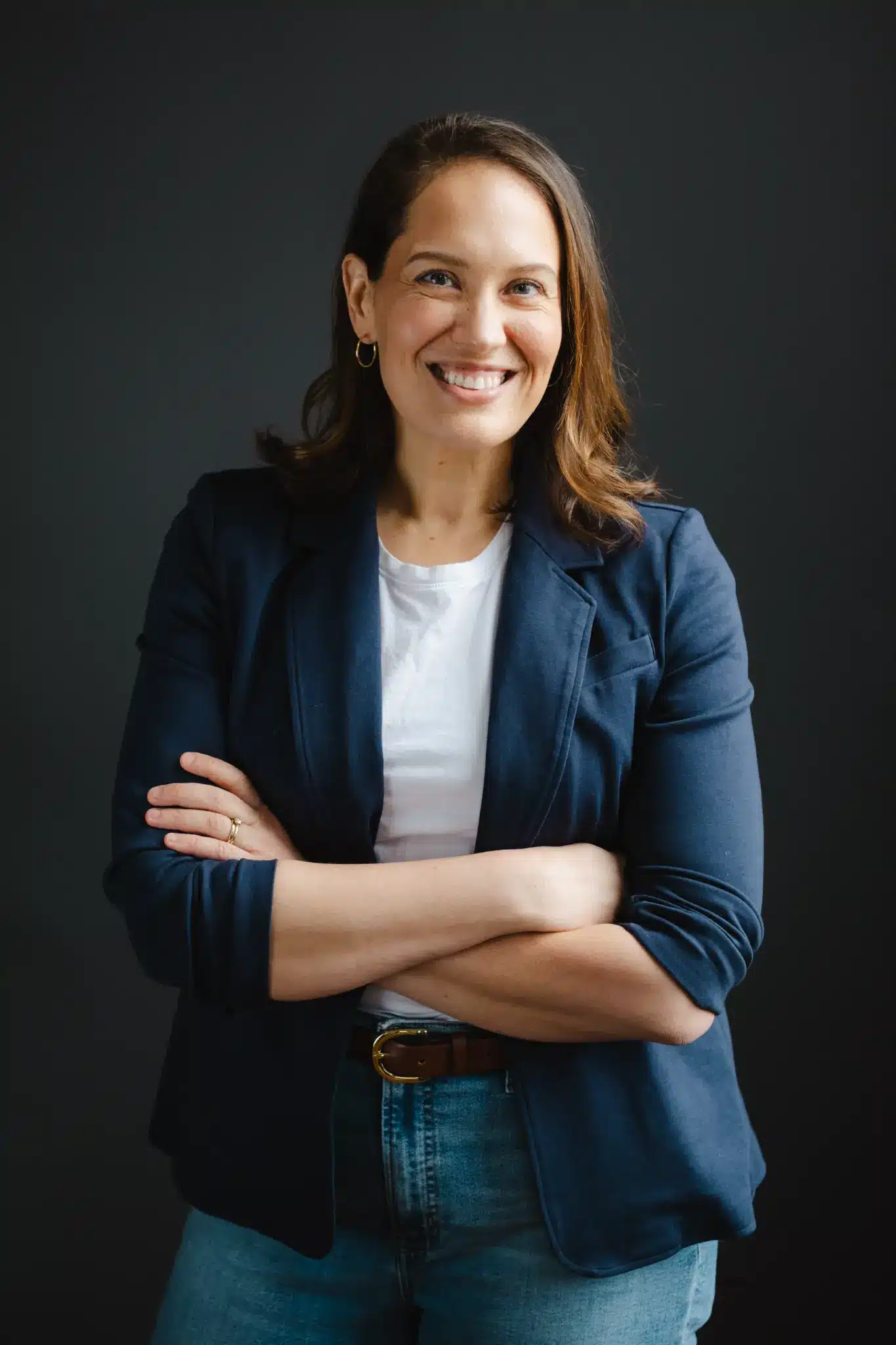
Annie Wright
LMFT · 15,000+ Clinical Hours · W.W. Norton Author · Psychology Today ColumnistAnnie Wright is a licensed psychotherapist, relational trauma specialist, and the founder and successfully exited CEO of a large California trauma-informed therapy center. A W.W. Norton published author, she writes the weekly Substack Strong & Stable and her work and expert opinions have appeared in NPR, NBC, Forbes, Business Insider, The Boston Globe, and The Information.
MORE ABOUT ANNIE