


LAST UPDATED: APRIL 2026
The major lessons I learned from living at Esalen in my twenties.
Today, I wanted to share one of my most popular older posts with you, an article titled,“44 Lessons Learned From Nearly Four Years Lived At Esalen, And Four Years Away…” SUMMARY Living at Esalen Institute. The legendary Big Sur center for human potential. In your twenties soun…
Last updated: June 2026 by Annie Wright, LMFT
Today, I wanted to share one of my most popular older posts with you, an article titled,“44 Lessons Learned From Nearly Four Years Lived At Esalen, And Four Years Away…”
SUMMARY
Living at Esalen Institute. The legendary Big Sur center for human potential. In your twenties sounds like a profound fantasy, and for therapist Annie Wright, it was. But it was also disorienting, embodied, and deeply instructive about boundaries, community, and the difference between insight and lasting change. This post shares the real, honest lessons from that unconventional chapter.
Human Potential Movement
The Human Potential Movement is a cultural and philosophical movement that emerged in the 1960s, centered on the belief that humans are capable of more than ordinary life allows. Greater consciousness, deeper connection, more authentic living. Esalen Institute in Big Sur, California became its most iconic hub, combining psychology, spirituality, art, and body-centered practice. Many modern therapeutic approaches. Including Gestalt therapy, somatic work, and humanistic psychology. Have roots there.
Related reading: What does it mean to be an ambitious, upwardly mobile woman from a relational trauma background?, Attachment Trauma: How Early Relationships Shape Your Adult Connections, Trauma and Relationships: When Your Professional Strengths Become Your Relationship Blindspots
Esalen Institute is a residential retreat center in Big Sur, California, founded in 1962 as a center for the human potential movement, which held that ordinary people were capable of far greater psychological, creative, and spiritual development than mainstream culture acknowledged. Living and working at Esalen offers immersive exposure to somatic practices, encounter groups, meditation, and humanistic psychology, alongside the particular disorientation of community life in which personal and professional boundaries are unconventionally structured. The lessons from that experience, especially around embodiment, community, and the distinction between insight and lasting change, are foundational to the relational and somatic frameworks used in this work. In my work with driven women, the hardest part about the Esalen-style insight moment is usually that awareness alone doesn’t produce change without sustained embodied practice.
In short: Esalen Institute is a Big Sur residential center founded in 1962 on the belief that people hold far greater potential than convention allows, offering immersive somatic, psychological, and contemplative practice.
Annie Wright, LMFT, draws on more than 15,000 clinical hours informed in part by nearly four years of living and working at Esalen, where the gap between intellectual insight and lasting embodied change became viscerally clear. Peter Levine, PhD, developer of Somatic Experiencing, a method that emerged in close conversation with the human potential tradition, documents how lasting psychological change requires somatic as well as cognitive integration (Levine 1997).
When I first published this piece, it was November 2015.
Relational trauma refers to psychological injury that occurs within the context of important relationships, particularly those with primary caregivers during childhood. Unlike single-incident trauma, relational trauma involves repeated experiences of emotional neglect, inconsistency, manipulation, or abuse within bonds where safety and trust should have been foundational.
So, obviously, I’ve been living away from Esalen a lot longer than four years now.
But still the content of the article , one of my longest and most meaningful to write , remains just as salient for anyone who is seeking to live a more enlivened life.
So, for a little context, I spent my mid- to late-twenties living, working, and studying at Esalen after doing a 180 with my path at age 25 and leaving my Washington, DC-based healthcare consulting job to head West in search of a life that felt more meaningful, more connected, and more authentic than the one I was living at the time.
I arrived at Esalen Institute a few days before Christmas 2007.
I spent nearly four years living on the cliffs of Big Sur learning how to be in better relationship with myself, others, and the world in general.
Those precious years were , hands down , some of the most formative, challenging, and healing times of my life (it’s where I met my husband and formed some of the deepest friendships of my life, not to mention the place where I clarified and acted on my desire to become a therapist).
It was there at Esalen, thanks to my many teachers , my facilitators, my workshop leaders, my coworkers, my friends, and even the workshop participants themselves , that I learned lessons that helped me then (and now) in my quest to live a more enlivened life.
The very thing I set out looking for in my mid-twenties.
These are the same lessons I weave into all of my psychotherapy work.
“The wound is the place where the Light enters you.”
RUMI
Helping my clients likewise craft more enlivened, authentic, and connected lives for themselves.
So in today’s post, I want to share these 44 lessons , filtered through my unique experience and interpretation , learned from my nearly four years of living at Esalen and now almost 7 years living away, in the hopes that these ideas may feel helpful to you, too, no matter where you are on your life journey.
I invite you to read this latest letter from the archive while on maternity leave post, and, when you’re done, please leave me a message in the comments on the blog to let me know which of the 44 lessons resonated with you the most. I would love to hear from you.
Here’s to healing relational trauma and creating thriving lives on solid foundations.
Warmly,
Annie
Frequently Asked Questions
DISCLAIMER: The content of this post is for psychoeducational and informational purposes only and does not constitute therapy, clinical advice, or a therapist-client relationship. For full details, please read our Medical Disclaimer. If you are in crisis, please call or text 988 (Suicide & Crisis Lifeline) or text HOME to 741741 (Crisis Text Line).
You deserve a life that feels as good as it looks. Let’s work on that together.
References
- Roszak, T. (1969). The Making of a Counter Culture: Reflections on the Technocratic Society and Its Youthful Opposition. Anchor Books.
- Kripal, J. J. (2007). Esalen: America and the Religion of No Religion. University of Chicago Press.
- Perls, F., Hefferline, R., & Goodman, P. (1951). Gestalt Therapy: Excitement and Growth in the Human Personality. Julian Press.
- Maslow, A. H. (1968). Toward a Psychology of Being. Van Nostrand.
- Brown, B. (2012). Daring Greatly: How the Courage to Be Vulnerable Transforms the Way We Live, Love, Parent, and Lead. Gotham Books.
- Siegel, D. J. (2012). The Developing Mind: How Relationships and the Brain Interact to Shape Who We Are. Guilford Press.
- van der Kolk, B. A. (2014). The Body Keeps the Score: Brain, Mind, and Body in the Healing of Trauma. Penguin Books.
The Human Potential Movement is a cultural and philosophical movement that emerged in the 1960s, grounded in the belief that human beings are capable of far more than ordinary socialized life allows. In consciousness, connection, creativity, and authentic expression. Esalen Institute in Big Sur, California, co-founded by Michael Murphy and Dick Price in 1962, became its most influential hub, synthesizing humanistic psychology, spirituality, somatic practices, and countercultural thought. Many modern therapeutic approaches. Including Gestalt therapy, somatic experiencing, and humanistic-existential psychology. Trace significant roots to the work developed at Esalen.
In plain terms: The Human Potential Movement was essentially a cultural experiment in taking seriously the idea that most of us are living at a fraction of our actual capacity. Not because we’re broken, but because the systems we live in haven’t supported full aliveness. Esalen was where that idea was lived, not just theorized.
The Lessons That Actually Stayed
Living at Esalen in my mid-to-late twenties was not what I expected. I arrived there having left a healthcare consulting job in Washington, DC. A life that looked successful from the outside and felt hollow from the inside. I was twenty-five, ambitious, and genuinely lost. I came to Big Sur because I couldn’t think of anywhere else to go that might help me figure out the difference between the life I was living and the life I actually wanted.
What I found was more complex than the profound fantasy I’d carried with me. Life on a residential campus with 200 people in close quarters, limited privacy, and a culture that valued emotional expressiveness above almost everything else was. To put it plainly. Intense. There were extraordinary moments. There were also moments of genuine confusion, heartbreak, and disorientation.
The lessons that stayed with me weren’t the workshop revelations or the spiritual breakthrough moments. They were smaller. Quieter. The lesson that how you eat a meal with another person is a relational act. The lesson that the body knows things the mind hasn’t caught up to yet. The lesson that most of what we call personality is actually adaptation. And that adaptation can be updated. The lesson that insight without embodiment doesn’t change anything lasting.
Amy, a client who’d spent a year at a contemplative center in her thirties, described a similar experience: “The thing that actually changed me wasn’t the teachings. It was living with people. Navigating community. Discovering which of my patterns were coping strategies and which were actually me.” That rings true to my Esalen experience. The community was the curriculum.
On Embodiment, Authenticity, and What I Weave Into My Clinical Work
The single most important thing I brought back from Esalen. And the thing I weave into my clinical work daily. Is the understanding that healing is not primarily a cognitive process. You can understand your childhood, name your wounds, articulate your patterns with extraordinary precision, and still live as if none of that understanding is true if the work hasn’t reached the body.
This is what somatic therapists mean when they talk about bottom-up processing. The cognitive understanding (top-down) can name what happened. But the nervous system (bottom-up) is what determines how you actually move through the world. Esalen’s emphasis on body-centered practice. Movement, breathwork, massage, sensory awareness. Wasn’t incidental to its therapeutic work. It was the point. The body, as Bessel van der Kolk, MD, psychiatrist and trauma researcher, later articulated in The Body Keeps the Score, keeps the score. Healing means reaching the score, not just reading about it. (PMID: 9384857)
I also carry forward a deep respect for the slow work of authenticity. At Esalen, I watched people. Including myself. Peel back the performed versions of themselves to find something rawer and truer underneath. That process is not comfortable. It requires tolerating genuine uncertainty about who you are when you’re not performing a role. But what it produces is not nothing. It produces people who know themselves well enough to make choices from that self rather than from the role. For driven women with relational trauma backgrounds, that is one of the most profound forms of recovery available.
What Living in Community Teaches You About Yourself
There is no cleaner mirror for your relational patterns than close community living. When you share meals with the same 200 people every day, when you have nowhere to retreat to except your small room, when the social web is close enough that every conflict is visible and every repair is a public act. You learn things about yourself that years of individual therapy might not surface.
I learned at Esalen that I was more avoidant than I’d realized. That my competence was partly a defense against needing anything from anyone. That I was deeply uncomfortable being seen as struggling. That I had a finely calibrated radar for other people’s emotional states and almost no equivalent sensitivity to my own. These weren’t pleasant discoveries. They were necessary ones.
Community also teaches the limits of insight without behavior change. You can understand why you go quiet when you’re hurt. The understanding doesn’t help much until you start actually speaking. You can know that you tend to over-function and under-ask. The knowing doesn’t change it until you start asking. Esalen’s genius was creating conditions where insight had to become practice. Where the community held you accountable to the changes you said you wanted to make, not because anyone was watching, but because you were living alongside them 24 hours a day and the patterns showed up anyway.
Both/And: The Gift and the Disorientation of Profound Experiences
I want to be honest about something: far-reaching experiences are both extraordinary and disorienting. The Human Potential Movement has always had a particular style of enthusiasm. The sense that breakthrough is perpetually available, that a workshop or a bodywork session or a well-timed gesture can change everything. And sometimes something like that happens. And then you have to go back to regular life and figure out how to integrate it.
The Both/And of my Esalen years is this: I am genuinely grateful for what I learned there. It shaped who I became as a therapist, as a person, as a partner and a mother. And it was also, at times, difficult, confusing, and even destabilizing to be in an environment that prioritized emotional rawness and breakthrough without always attending as carefully to what comes after: the integration, the ongoing relationship maintenance, the translation of insight into a sustainable daily life.
What I bring forward from Esalen is the conviction that full human aliveness is possible and worth pursuing. And also the clinical humility to know that the work of actually becoming well. Not just the moments of transformation, but the day-in, day-out restructuring of your nervous system, your patterns, and your relationships. Is slower, quieter, and less dramatic than a Big Sur workshop. Both matter. The insight and the integration. The breakthrough and the long, ordinary work of making it true.
Megan, a surgeon who attended a week-long intensive retreat in her late thirties, told me something that struck me as exactly right: “The retreat cracked something open. I came home and cried for two weeks. And then I had to figure out what to do with what had cracked open. In a life that still had call schedules and a mortgage and a partner who hadn’t been to the retreat.” That integration period. Living with the new insight in ordinary circumstances. Is where the real work happens. Not on the mountain. In the kitchen. That’s what I learned at Esalen, and it’s what I try to hold space for with every client navigating a threshold experience.
The Systemic Lens: Who Gets to Go to Esalen
I’d be remiss not to name something directly: the kind of extended far-reaching experience I had at Esalen in my mid-twenties was possible in part because of privilege. I had the geographic mobility to move to Big Sur. I had no dependents. I had enough flexibility in my circumstances to spend nearly four years outside conventional career paths. And I arrived at a community that was, in that era, predominantly white and class-privileged in ways that shaped its culture and its blind spots.
The Human Potential Movement’s focus on individual transformation, while genuine and valuable, has historically underemphasized the structural conditions that make transformation possible or impossible. The woman working three jobs to support her children doesn’t have the luxury of a year at a residential community. The healing approaches developed in Big Sur in the 1960s and 70s were developed by and for a relatively specific demographic. This doesn’t make the insights wrong. But it does mean they need to be carried into more diverse, more equitable, and more structurally aware contexts to fulfill their promise.
The therapy I practice now is informed by what I learned at Esalen. It is also informed by a commitment to making that kind of depth-oriented relational healing available to driven women regardless of their cultural background, their economic circumstances, or their access to the specific environments where this work traditionally happens. The insights about the body, about community, about authenticity and integration. Those belong to everyone, not only those who can afford four years in Big Sur.
The 44 Lessons: The Ones That Changed Me Most
In the original article I’m referencing here. The one I wrote in 2015 about my nearly four years at Esalen. I shared 44 lessons about living a more enlivened life. Of those 44, a handful have stayed with me as the most foundational, the ones I return to again and again in my own life and my clinical work.
That the body is always talking. Before Esalen, I lived almost entirely from the neck up. My body was a vehicle for my mind. Something to be maintained so the thinking could continue. What Esalen offered, through its emphasis on somatic practices, was the radical idea that the body isn’t just a container for the self. It is the self, or a crucial part of it. Learning to listen to it. Not to override or manage it, but to actually listen. Was among the most disorienting and ultimately healing things I did in my twenties.
That insight without behavior change is just information. Esalen had a lot of insight. People arrived for workshops and had realizations. Some of them changed, sustainably. Many didn’t. What distinguished the ones who changed from the ones who didn’t wasn’t the depth of the insight. It was what they did with it in the days and months afterward. Insight is the entry point, not the destination. This is something I try to hold in my clinical work: the goal isn’t understanding. The goal is living differently.
That community is both the curriculum and the hardest part. Living in close community with 200 people is not a therapeutic exercise. It is life, compressed and intensified. Every relational pattern shows up. Every avoidance strategy gets tested. Every old wound gets poked by someone who doesn’t know they’re doing it. The gift of community is that it mirrors you constantly. The challenge is that you can’t control the mirror.
That the willingness to be a beginner is a form of courage. At Esalen, I was regularly in rooms full of people who knew things I didn’t. About their bodies, about meditation, about their own emotional lives, about forms of work and practice I’d never encountered. My default response was to perform competence. What slowly shifted was the capacity to be genuinely new. To say I don’t know, to ask the basic question, to let myself be taught. For someone from a relational trauma background, where competence had been a survival strategy since childhood, that was among the more difficult and most valuable things I practiced.
What I Carry Into My Clinical Work from Esalen
Fifteen years after leaving Big Sur, the most lasting influence of my Esalen years on my clinical practice is the conviction that healing is embodied, not just cognitive. The women I work with. Driven, ambitious, often extraordinarily articulate about their histories and their patterns. Frequently arrive having done significant intellectual work on themselves. They’ve read the books, been in therapy, understand their attachment styles. They understand their wounds beautifully. And they haven’t yet healed them, because understanding a wound and healing a wound are different activities.
What healing requires is reaching the body. The nervous system, the felt sense, the somatic residue of the original experiences. This is what somatic therapies do. This is what EMDR does at its best. This is what relational therapy does when the relationship itself becomes the medium of change. These aren’t techniques I could have articulated before Esalen. They’re ideas I understand now, in part, because I spent years in an environment that took the body and the relational field seriously as sites of learning and change.
I also carry forward from Esalen a particular kind of tolerance for ambiguity in healing. Breakthroughs are not the unit of measure. The slow, incremental, unsexy restructuring of the nervous system and the relational template. That is the unit of measure. The patient, non-linear work of becoming incrementally more yourself, more free, more able to receive and give. That is what I’m watching for in the clients I work with, and what I’m in relationship with in my own ongoing life.
A Note on Integration and the Ordinary Work of Becoming Well
I want to close with something I didn’t fully understand at Esalen but have come to understand clearly in the years since: the extraordinary moments are not the substance of healing. They’re the doorways. What happens after. The slow, unglamorous, daily work of integrating insight into the body and the life. That is where actual change occurs.
I see this with clients who have breakthrough moments in therapy. A profound recognition, an unexpected emotional release, a sudden clarity about a pattern that’s run their life for decades. These moments are real and valuable. And they are not, by themselves, sufficient. What happens in the weeks and months following. Whether the insight gets tested in real relationships, whether the new awareness gets practiced in real situations, whether the breakthrough gets integrated into actual daily choices. That is what determines whether the moment becomes healing or just a memorable experience.
This is one of the gifts of ordinary life over retreat contexts: ordinary life is the laboratory. Your relationships, your daily choices, your work, your moments of conflict and repair and rest and pleasure. These are where the real integration happens. Esalen was a remarkable and unusual environment. Your kitchen, your commute, your therapy session on Tuesday morning. These are where the Esalen lessons actually live or die.
Here’s to the ordinary work of becoming well. It’s not as dramatic as a Big Sur breakthrough. It matters more.
Esalen as Mirror: What Close Community Reveals
One of the gifts of the Esalen model. And one I’ve carried into my understanding of group therapy, community, and the relational context of healing. Is the recognition that you cannot fully know yourself without being in sustained relationship with others. Solo practice, individual therapy, journaling, meditation: these are valuable. But they are limited as mirrors. They reflect what you can see and feel on your own. What they cannot show you is how you actually land with other people. What you trigger, what you avoid, how you show up when you’re scared or hurt or hungry for connection and the tools don’t work.
Living in community at Esalen showed me things about myself that years of introspection hadn’t surfaced. I was more avoidant of conflict than I’d known. More critical in my own assessment of others than I’d admitted. More deeply invested in being perceived as capable and together than I’d recognized. These were not comfortable discoveries. And they were necessary ones for becoming the therapist and the person I wanted to be.
The relational mirror that community provides is one of the most powerful tools for change available to human beings. It’s why group therapy is so effective. It’s why community matters in healing, not just as support but as curriculum. And it’s why I continue, in my own life, to invest in relationships that have the depth and honesty to reflect me accurately. Not just the relationships that feel comfortable, but the ones that tell me the truth.
For driven women who have historically protected themselves from this kind of relational exposure. Who have made themselves useful, competent, and needed rather than vulnerable, seen, and genuinely known. Building this kind of community is among the most important and most difficult work of healing. Esalen taught me that. And I’ve spent the years since trying to live it.
On Leaving Esalen and Coming Back to Ordinary Life
Leaving Esalen after nearly four years was its own kind of transition. I was twenty-nine, newly in love with the man who would become my husband, and about to re-enter the world of ordinary professional life after years in a community where the rules were different, the conversations were deeper, and the days were structured around practices that most people outside Big Sur had never heard of.
What I found was that re-entry is real. The outside world doesn’t slow down to meet your expanded consciousness. It moves at its own pace, with its own values and its own unspoken rules about what’s appropriate to name in the middle of a Tuesday meeting. Learning to integrate what I’d gained at Esalen into a world that wasn’t Esalen. To carry the embodied, relational, authentic-living commitments into corporate offices and parent-teacher conferences and ordinary dinner parties. That was a years-long project.
It’s also, I think, the most valuable part of the whole experience. Because it’s where the rubber meets the road. It’s easy to be present and authentic in a community designed for presence and authenticity. It’s harder in the school parking lot. It’s harder in a performance review. It’s harder when you’re exhausted and under-resourced and the old patterns are pulling. And it’s in those harder contexts that the practices either prove their worth or reveal their limits.
Most of what I learned at Esalen has proved its worth. The practices of listening to the body, of tolerating ambiguity without rushing to resolution, of being in honest relationship, of understanding that insight without behavioral change is just information. These have been genuinely durable. They work in ordinary life because ordinary life is precisely where they need to work.
Here’s to the lessons that stay. Here’s to the communities, formal and chosen, that help us become more ourselves. And here’s to healing relational trauma and creating thriving lives on solid foundations. Wherever in the world you happen to be standing right now.
If what you’ve read here resonates, I want you to know that individual therapy and executive coaching are available for driven women ready to do this work. You can also explore my self-paced recovery courses or schedule a complimentary consultation to find the right fit.
How to Heal: Integrating Profound Experiences Into an Ordinary Life
Places like Esalen. And the intense growth experiences they catalyze. Have a particular way of opening you to yourself. The question that follows is harder: how do you actually carry what you learned back into a life that doesn’t share your altitude? Amy and Megan, whom you may have met earlier in this post, both encountered a version of this. A profound experience. A retreat, a period of deep inner work, a relationship that cracked something open. And then the gap between who you glimpsed yourself to be and who you manage to be on a Tuesday morning. Forcing yourself to sustain the peak experience doesn’t work. Pretending the ordinary life is enough after the opening doesn’t work either. What actually works is slower, more humble, and ultimately more sustainable than either of those paths.
Here’s the path I walk with clients, in roughly this order:
1. Begin with the body as your integration anchor. After any significant opening experience. Whether that’s a week at a residential center, a breakthrough in therapy, or a period of unusual clarity. The nervous system needs time to metabolize what happened. Many people skip this step and rush back into normal life, trying to apply their insights before the insights have actually settled. Start instead by asking: what does my body know from this experience that my mind hasn’t yet been able to articulate? Stay with the felt sense. The way a particular lesson lands as warmth in the chest, or the way a realization about yourself produces a specific kind of quieting. Somatic therapy is specifically designed to support this kind of integration, helping you anchor insight in the body so it doesn’t evaporate when life gets complicated again.
2. Name the specific lessons. Not just the feeling tone. Far-reaching experiences often produce a profound emotional atmosphere that can be hard to translate into usable content. Part of healing is doing the translation work: What exactly did you learn? Not the gestalt, but the specific claim. I learned that I don’t actually need approval to feel okay. I learned that my body is trustworthy when I slow down enough to listen to it. I learned that I’ve been organizing my entire life around a fear that is older than I am. As explored in the sections on embodiment and the lessons that changed me most, the specificity is what makes the insight portable. Vague epiphanies tend not to survive contact with real life; named, specific claims become reference points you can actually return to.
3. Run small experiments that bring the insight into contact with ordinary life. The integration question isn’t “how do I preserve what I experienced?”. It’s “how do I find the ordinary-life version of what I learned?” If you discovered at Esalen (or in a retreat, or in an intense therapeutic period) that you’re capable of more authentic expression than you usually allow yourself, the experiment isn’t to be authentically expressive all the time starting Monday. It’s to pick one relationship, one conversation, one low-stakes moment this week where you try it. Small, deliberate, with enough space to notice what happens. Integration happens in the ordinary, not despite it.
4. Do the sustaining work inside a reliable therapeutic relationship. Profound experiences are openings, not completions. What I see consistently is that the people who get the most long-term benefit from intense growth experiences are the ones who have a reliable relational container. A therapeutic relationship, a supervision group, a community of practice. To metabolize the experience over time. Individual therapy can serve as exactly that container: a weekly (or biweekly) space to process what’s continuing to unfold, to notice where the opening is closing back up under the pressure of ordinary life, and to do the slow work of making the transformation more than a memory. The relationship sustains what the experience began.
5. Hold the systemic lens: profound experiences happen in a context of privilege. One of the things worth sitting with. As we explored in the section on who gets to go to Esalen. Is that access to intensive growth experiences is not distributed equally. Time, money, and freedom from caregiving demands all shape who can spend a month living at a residential center or attending expensive retreats. This isn’t a reason to diminish what you received. It’s a reason to hold it with some humility: you got something many people don’t get access to, and there’s a responsibility in that. Part of integration, for many clients, is asking how the growth they’ve done can be offered outward in some form. Through the quality of their presence, the way they show up in community, the kinds of conversations they’re willing to have.
6. Grieve the peak and learn to love the plateau. This step sounds counterintuitive, but it’s essential. After an opening, there’s often a period that feels like loss. The ordinary life feels drabber by comparison, the self feels smaller than who you were in the expanded state. That grief is real and worth feeling. But the goal of integration is not to get back to the peak. It’s to discover that the plateau, tended carefully, is the actual territory where life is lived. The inner child work lens is useful here: the part of you chasing the peak may be looking for the sustained attunement that wasn’t available in childhood. The plateau, with the right inner resources, can actually provide that. If you let it.
Integration is the quiet, humbling sequel to the far-reaching experience. And in my view, it’s where the real work happens. If you’re in that phase right now, I’d love to support you through it. Individual therapy is often the most reliable container for that kind of ongoing integration, and if you’re also navigating how the lessons apply to your professional life, executive coaching can be a useful complement. You’re welcome to schedule a consultation to talk through what would serve you best right now.
ANNIE’S SIGNATURE COURSE
Fixing the Foundations™
The deep work of relational trauma recovery. At your own pace. Annie’s step-by-step course for driven women ready to repair the psychological foundations beneath their impressive lives.
Warmly, Annie
Even with driven, early relational disconnection can manifest as a quiet struggle with intimacy, trust, and setting boundaries. You might find yourself feeling isolated or hypervigilant, constantly seeking belonging yet fearing vulnerability. Recognizing these patterns is crucial for supporting genuine connections and breaking cycles that keep you stuck.
Living authentically involves embracing discomfort and uncertainty as part of your growth journey. It’s about aligning your inner self with your outward actions, requiring consistent practice and honest boundary work. Start by gently exploring what truly resonates with you, even if it feels unfamiliar, and gradually integrate these insights into your daily life.
Attachment wounds, stemming from inconsistent or neglectful early care, can deeply affect your capacity for trust and safety. You might unconsciously anticipate abandonment or betrayal, leading to self-protective behaviors that push others away. Healing involves understanding these ingrained patterns and learning to build secure connections with intentionality and self-compassion.
Integrating mind, body, and spirit is about growing a holistic sense of self, not a quick fix. A practical first step could be dedicating a few minutes each day to mindful awareness, noticing your thoughts, physical sensations, and emotional responses without judgment. This simple practice builds self-awareness, which is foundational for deeper integration and authentic living.
Repeating relationship patterns often stems from unconscious attachment wounds and early relational experiences that feel familiar, even if they’re harmful. Your nervous system seeks what it knows, even when it’s painful. Healing involves bringing these patterns into conscious awareness and gradually building new, healthier relational experiences.
Setting healthier boundaries is an act of self-respect and ultimately strengthens relationships. Start by identifying what you truly need and communicating it clearly and kindly. Remember, boundaries are not walls; they are bridges to more authentic connection. It’s okay to prioritize your well-being, and doing so models healthy relating for others.
Further Reading on Relational Trauma
Explore Annie’s clinical writing on relational trauma recovery.
- Narcissistic Abuse & Recovery Guide
- Childhood Emotional Neglect Guide
- Attachment Styles Guide
- Complex PTSD Guide
- EMDR Therapy for Women
- Inner Child Work Guide
- Trauma and the Nervous System
- Intergene
References
Peer-Reviewed Research (Vancouver)
- van der Kolk BA, Wang JB, Yehuda R, Bedrosian L, Coker AR, Harrison C, et al. Effects of MDMA-assisted therapy for PTSD on self-experience. PLoS One. 2024;19(1):e0295926. doi:10.1371/journal.pone.0295926. PMID: 38198456.
WAYS TO WORK WITH ANNIE
Individual Therapy
Trauma-informed therapy for driven women healing relational trauma. Licensed in 15 U.S. jurisdictions, including Colorado (telehealth only), and registered to provide telehealth in Florida.
Executive Coaching
Trauma-informed coaching for driven women navigating leadership and burnout.
Fixing the Foundations
Annie’s signature course for relational trauma recovery. Work at your own pace.
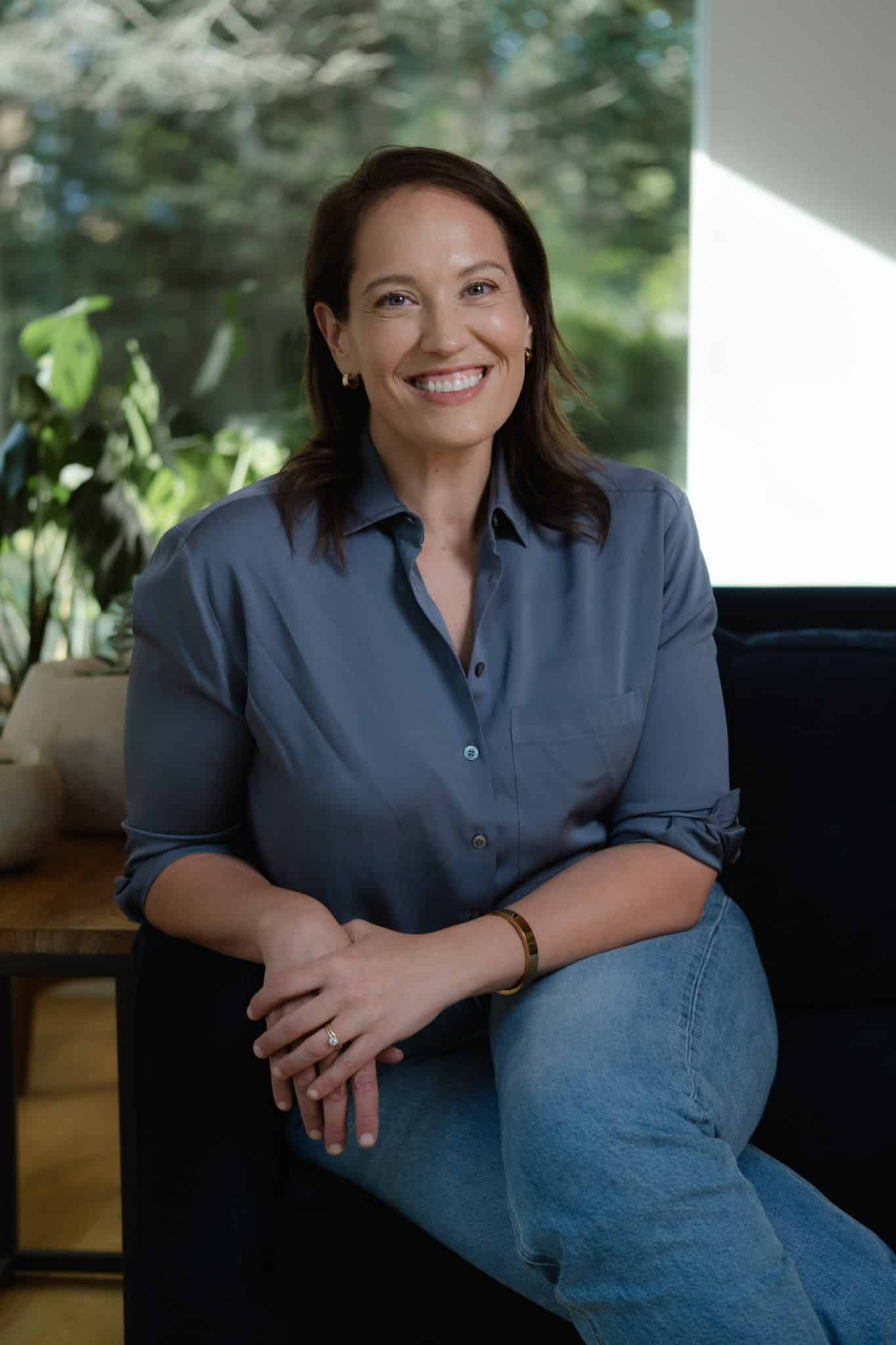 About the Author
Annie Wright, LMFT
LMFT #95719 · Relational Trauma Specialist · Author, W.W. Norton 2027
Helping driven women finally feel as good as their résumé looks.
As a licensed psychotherapist (LMFT #95719), trauma-informed executive coach, and relational trauma specialist with over 15,000 clinical hours, she guides driven women. Including Silicon Valley leaders, physicians, and entrepreneurs. In repairing the psychological foundations beneath their impressive lives. Annie is the founder and former CEO of Evergreen Counseling, a multimillion-dollar trauma-informed therapy center she built, scaled, and successfully exited. A regular contributor to Psychology Today, her expert commentary has appeared in USA Today, Forbes, Business Insider, NBC News, and The Information. She is currently writing her first book with W.W. Norton.
Credentials & LicensureLicenseLicensed Marriage and Family Therapist (LMFT #95719)
Clinical Experience15,000+ direct clinical hours
Licensed in 15 U.S. Jurisdictions, including Colorado (telehealth only), and Registered for Telehealth in FloridaCA LMFT95719 · CO MFT.0003236 (telehealth only) · CT 003806 · DC LMFT200001447 · FL TPMF356 (out-of-state telehealth registration) · IL 166.012270 · ME MF8600 · MD LCM1206 · NH 1030 · NJ 37FI00254800 · NY 002805 · TX 206391 · UT 14300323-3902 · VA 0717002589 · WA MFT.LF.70098096
Signature FrameworksCreator of House of Life™ and Fixing the Foundations™
Forthcoming BookThe Everything Years (W.W. Norton)
Past LeadershipFounder & former CEO, Evergreen Counseling
Featured Expert CommentaryRegular contributor to Psychology Today. Expert commentary has appeared in USA Today, Forbes, Business Insider, NBC News, and The Information.
